By Azabache Producciones on
Point-of-sale displays: in Italy, seasonal window displays grow as permanent fixtures decline
Short-term activations are reshaping point-of-sale display design and the elements that should remain ready for the next campaign.
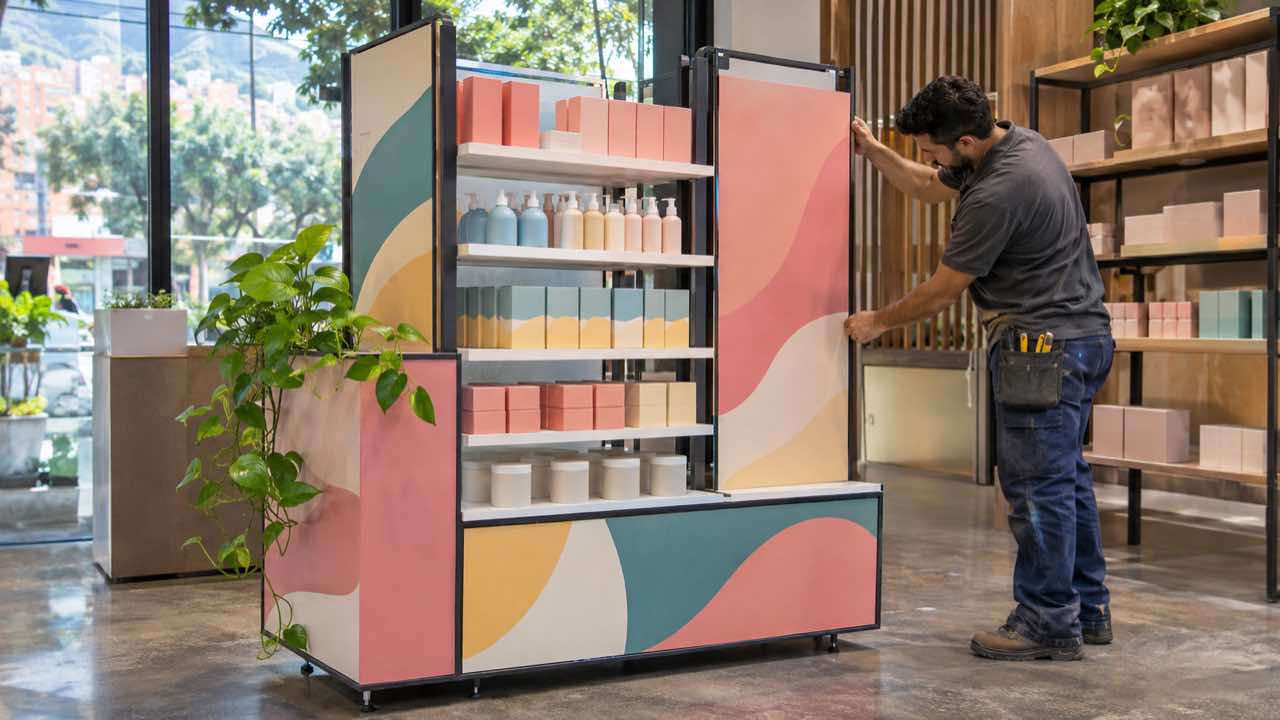
Seasonal campaigns, launches and limited editions have made speed of change a condition of the retail floor. A display that cannot be updated has to be rebuilt for every campaign. That is why its value depends not only on how it looks, but on whether its messages and parts can be renewed.
A survey by FESPA Italia, the association that brings together printers in that country, of suppliers that produce large-format pieces for retailers shows it in figures. According to the summary by PRINTlovers, published in February 2026, scenic window displays, staged like a scene, grew 13.39% compared with 2023, while permanent furniture and display systems declined. Retail in Italy is favouring quick, seasonal and easily replaceable pieces. It is a measurement from Italy, not Medellín, but it shows where in-store display is heading.
What is the difference between a temporary and a modular display?
A temporary display is designed for a campaign, promotion or launch; a modular one combines parts that can be rearranged or updated. Modularity allows the message to change without replacing the entire structure. Interchangeable graphic panels, product spaces and a reusable base separate what changes from what can remain.
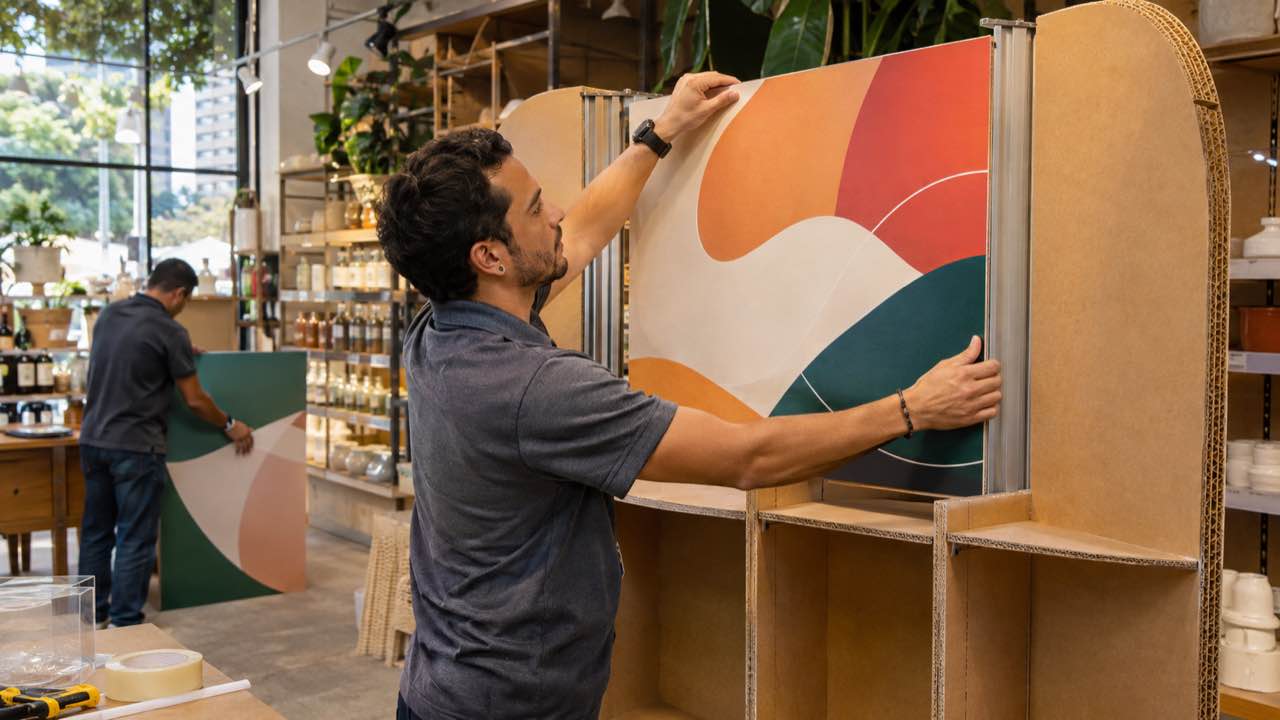
Person replacing a graphic panel on a modular display. Illustrative image generated with artificial intelligence.
The same Italian survey reported that demand for personalization tied to limited editions rose 44 percentage points, while companies that do not differentiate between one store and another grew 15 points. Personalization is concentrating on specific moments rather than on every point of sale. That is why design often starts by defining how long the piece will be on display and which elements will change during the campaign.
What should be settled before producing it?
Dimensions, message placement, images and interchangeable parts are best defined in the file before printing. A well-prepared file reduces adjustments every time the display changes version. If the replaceable panels share the same dimensions, the next campaign only needs the new graphics printed.
Which material suits a short-term display?
Material selection has no single answer. An indoor piece, a brief activation and a display that will be moved several times face different requirements. The required durability changes with the location, duration and mounting system. Cost, lead time and material availability also depend on the quantity and finishes defined for the project.
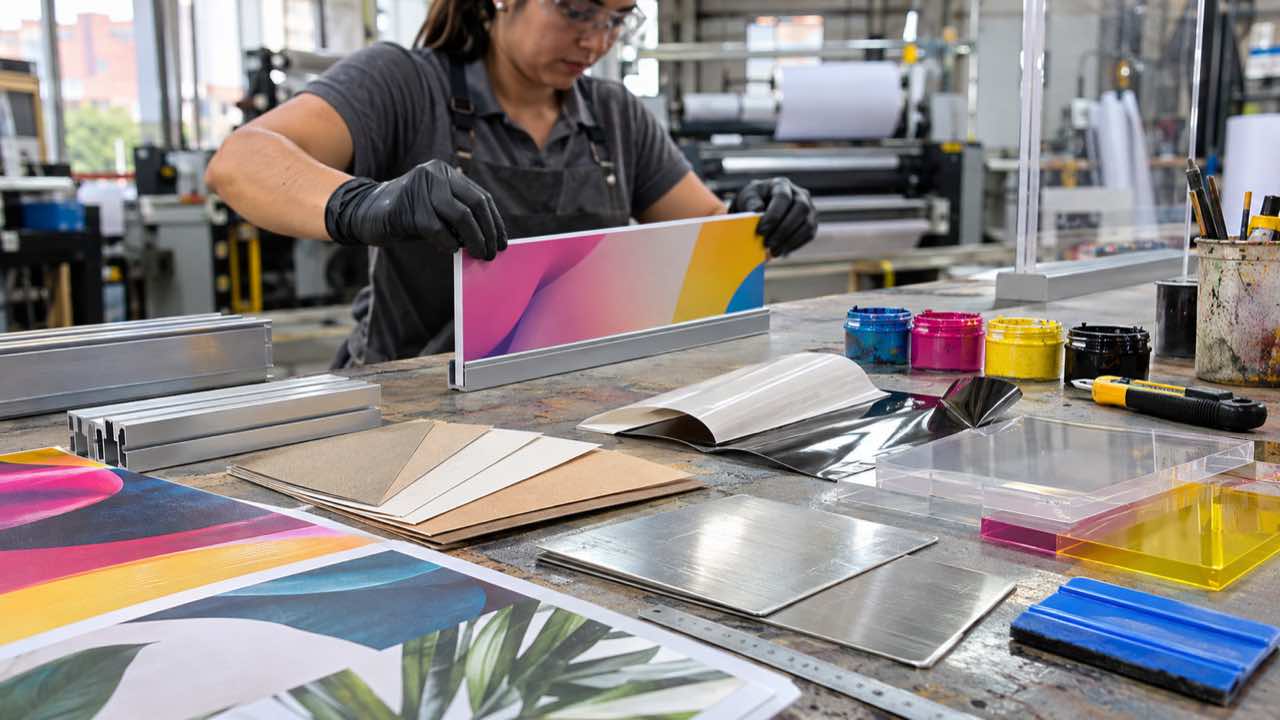
Printed panel samples and reusable bases for displays. Illustrative image generated with artificial intelligence.
Reuse also matters for sustainability. In the 2025 Print Census by FESPA, the international federation of printing associations, based on responses from 774 companies in 89 countries, 92% said sustainability is important, but only 40% have made it a core strategic priority. A structure that serves several campaigns can reduce replacements between them. That depends on the design separating reusable parts from changing graphics, and on actual conditions of use.
An activation works best when the message, the product and the shopper's path through the store are considered together. The display should make the campaign understandable within a few seconds. Point-of-sale display and advertising projects bring printing, structure and installation together around that need.