By Azabache Producciones on
Temporary work-zone signage guides road closures: the plan sets routes and support
A road closure needs more than a notice: temporary signage organizes the route, warns of risk, and supports traffic movement.
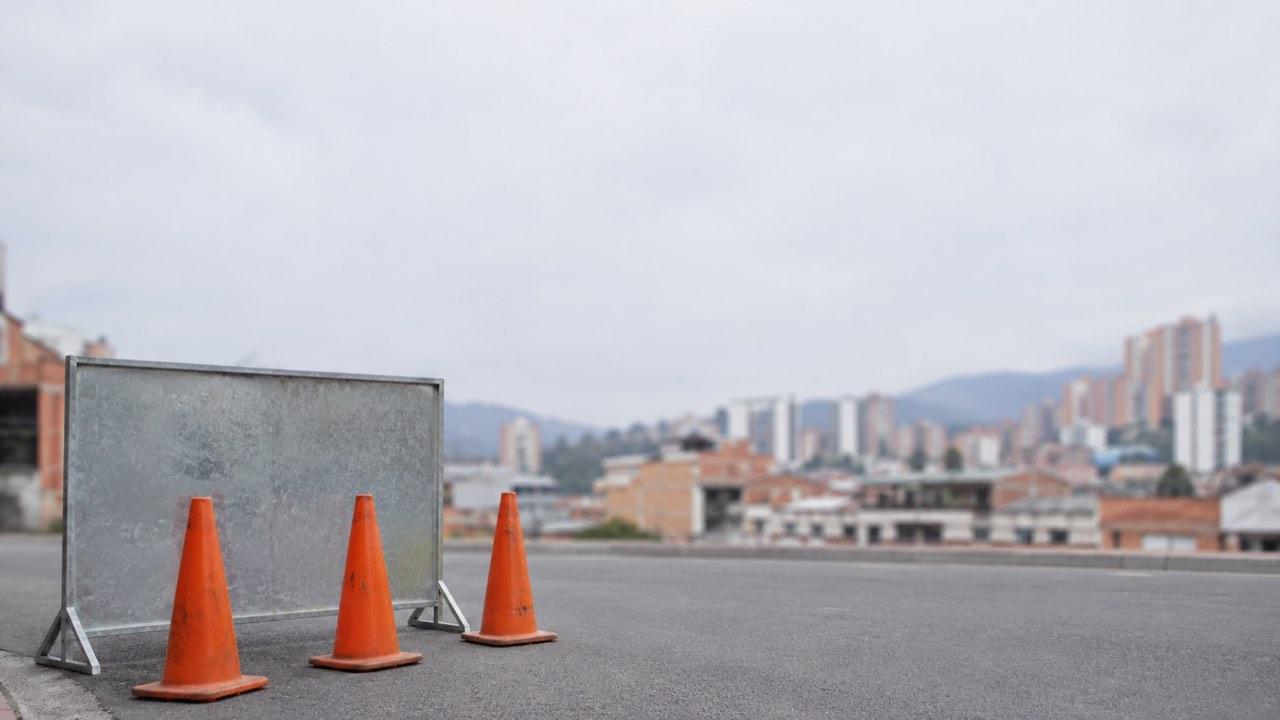
A road closure changes the route for drivers, pedestrians, and cyclists from the first notice. Temporary work-zone signage turns that change into visible, orderly information by anticipating risk, marking the detour, and making the work area recognizable.
For closures started for the Metro de la 80 maintenance yard, announced on September 23, 2026, Metro de Medellín reported detour routes, warning signs, and traffic assistants within a Traffic Management Plan endorsed by the Mobility Secretariat. The same closure needs to guide people before they reach the point where the road changes.
That case illustrates an important distinction: a work-zone sign does not operate as an isolated piece. Detour routes, warning notices, and on-road support make up one operation, so design, placement, and installation need to match the actual route.
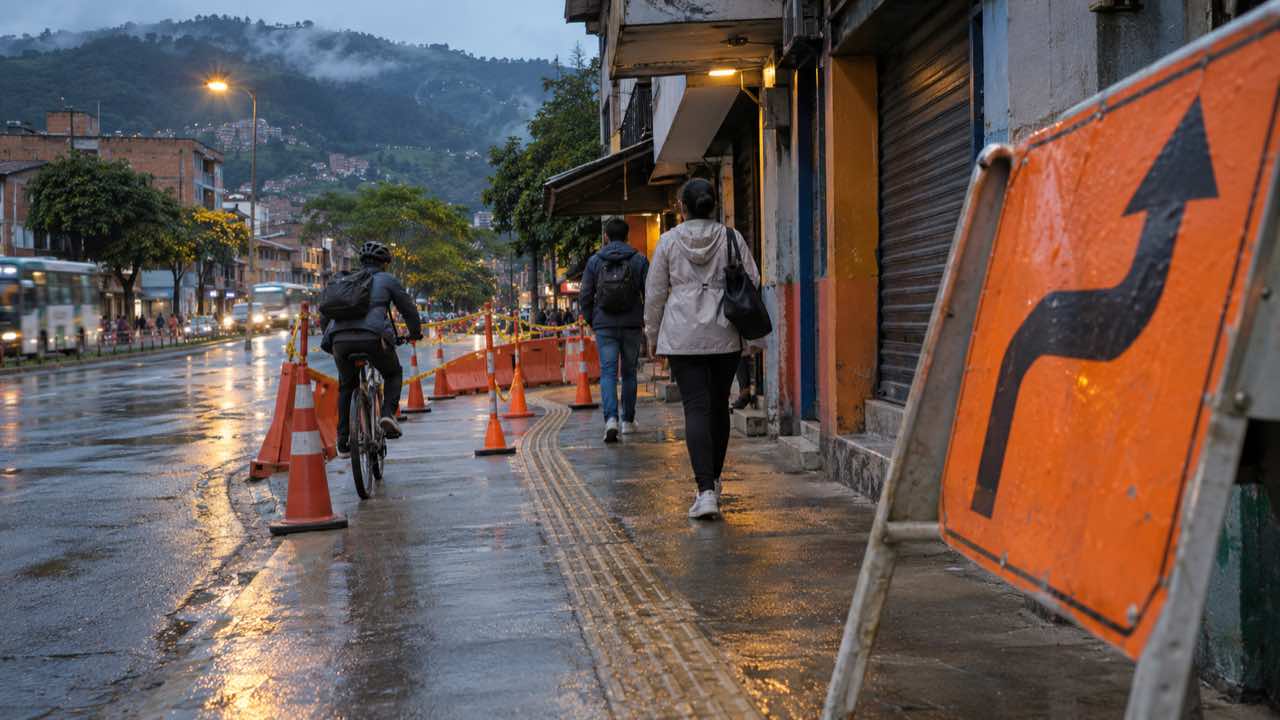
Warning sign before a detour with pedestrians and cyclists. Illustrative image generated with artificial intelligence.
Resolution 20243040045005 of 2024 adopted the Road Signage Manual for work on roads and events that affect traffic. According to Colombia's Ministry of Transport, the manual sets uniform criteria to design, place, install, remove, modify, and maintain this signage. Road signage is managed throughout the traffic change, not only at the start.
That is why a useful quote starts with the closure plan, expected routes, and the period each piece will be used. Production and installation timing depends on volume, finishing, and site conditions; materials also do not all respond alike to Medellín's rain, sun, or traffic.
On-site work changes as well: each piece needs to arrive legible, remain in position, and be removed or altered as the work front moves forward. Installation needs to follow the planned sequence so the route keeps its meaning, particularly where an alternate route crosses normal circulation areas.
For projects that need coordinated setup and removal, signage installation and removal in Medellín brings production together with field work. One intervention may need replacements as work stages change, keeping every piece consistent with the current closure.
The Metro de la 80 progress figure, reported then as 55%, belongs to the September 23, 2026 update and does not on its own describe the project's later status. The lasting lesson is that every closure needs information suited to its actual stage, rather than repeated signs unrelated to that day's circulation.