By Azabache Producciones on
Decree 1099 affects national printing: letterhead does not change for every business
Decree 1099 reshapes national public printing contracts, while letterhead still depends on how each organization communicates.
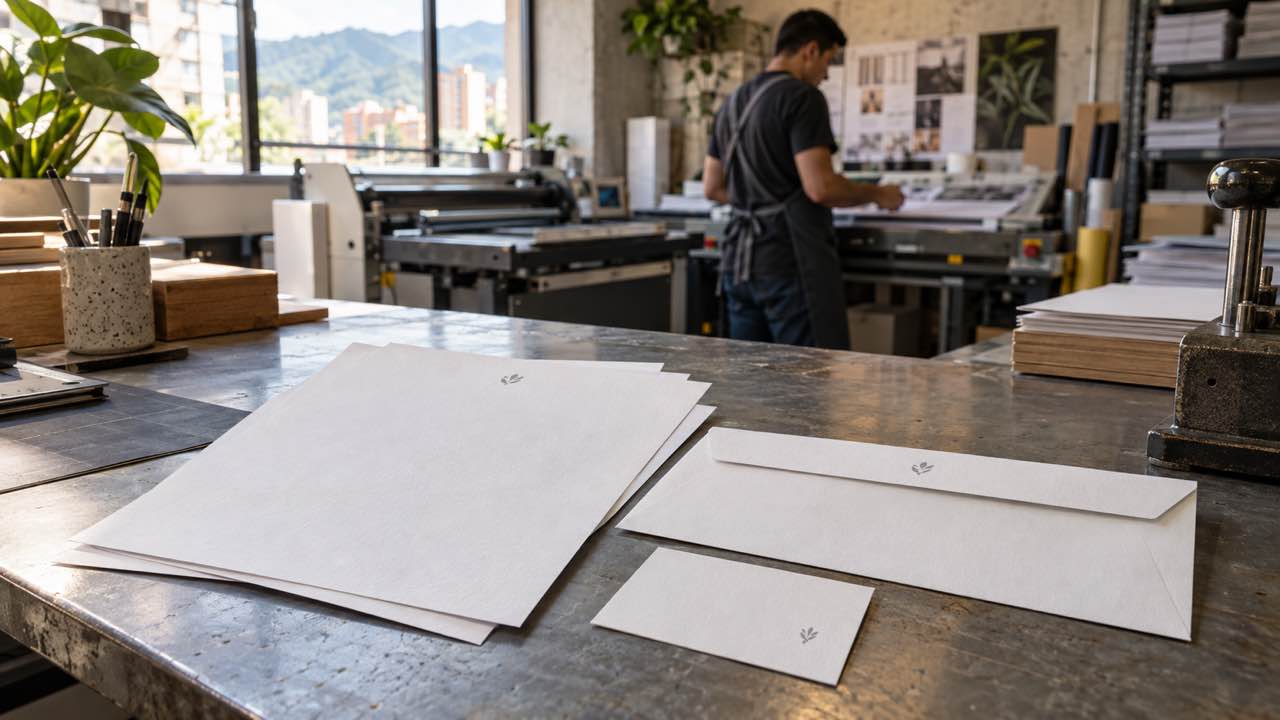
Letterhead may look like a minor choice until it must support a formal communication. Decree 1099 of 2025, issued on October 17 and published on October 18, 2025, regulated how national public entities contract printing and other graphic communication needs with Colombia’s National Printing Office.
Its scope does not make the measure mandatory for every business. Ministries, administrative departments, superintendencies, special administrative units, national public establishments, and bodies of the Legislative and Judicial branches are its express recipients; a private business or a territorial entity calls for a different assessment.
That is why company letterhead is first defined by its role: identifying the sender, organizing contact details, and maintaining a consistent appearance in letters, proposals, and communications. Paper and printing follow that decision.
There is no universal price, minimum run, or delivery time for a quotation. It changes with quantity, paper, inks, finishes, and artwork approval; stating those scopes in writing prevents comparisons between proposals that do not include the same work.
What is company letterhead?
It is institutional stationery that combines an organization’s identity with information that helps identify and contact it. It is not a legal form on its own: its value is that a letter, quotation, or certificate reads as part of the same business even before the signature is examined.
It can be printed for physical use or exist as a digital template. When correspondence goes on paper, the design needs a broad, clear area for content; a header that competes with the text turns visual identity into noise.
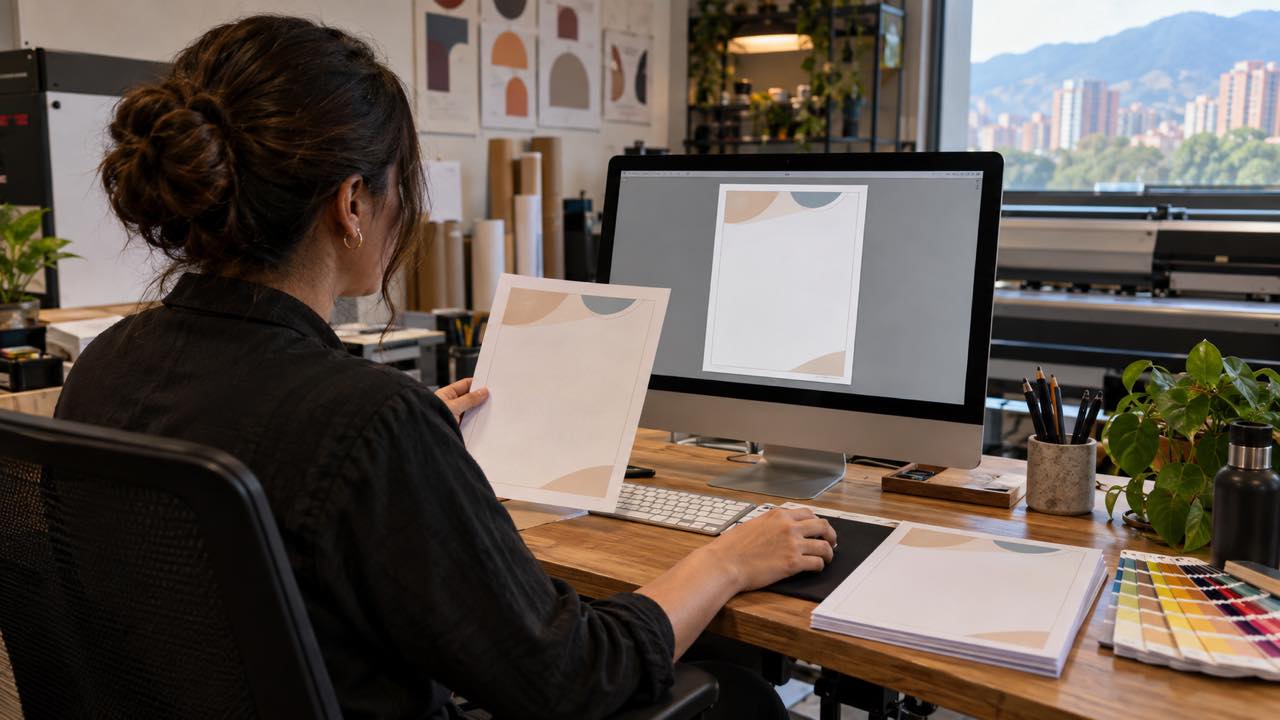
Designer compares a letter template with a printed sample. Illustrative image generated with artificial intelligence.
What information should company letterhead include?
Essential information usually includes the legal or business name, logo, and contact channels the organization actually uses. Address, telephone, email, and website only help when current; outdated details undermine the usefulness of the whole stationery set, even when printing is accurate.
A tax identification number may also appear when the document type warrants it. The strongest letterhead makes the sender clear without taking space away from the message. The placement of details and logo should follow the organization’s visual identity and the intended use of the sheet.
How can letterhead be designed in Word?
Word can produce a useful template for recurring documents. Headers and footers help keep the identity on every page, while margins reserve a safe area for text and keep company information from sitting too close to the edge.
Before printing, a full-size sample helps reveal issues. Bleed, the extra image area trimmed at the end, is only needed when color or an image reaches the edge; when it is used, both the file and printing process need to account for it from the start.
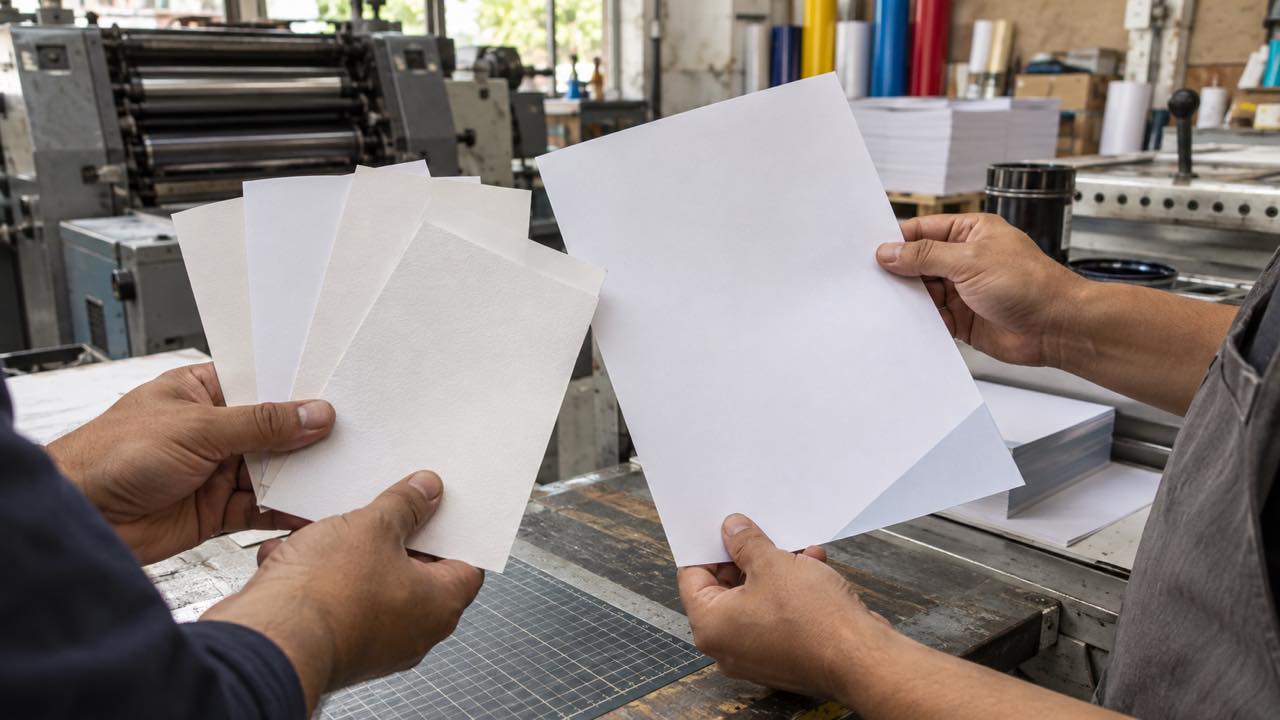
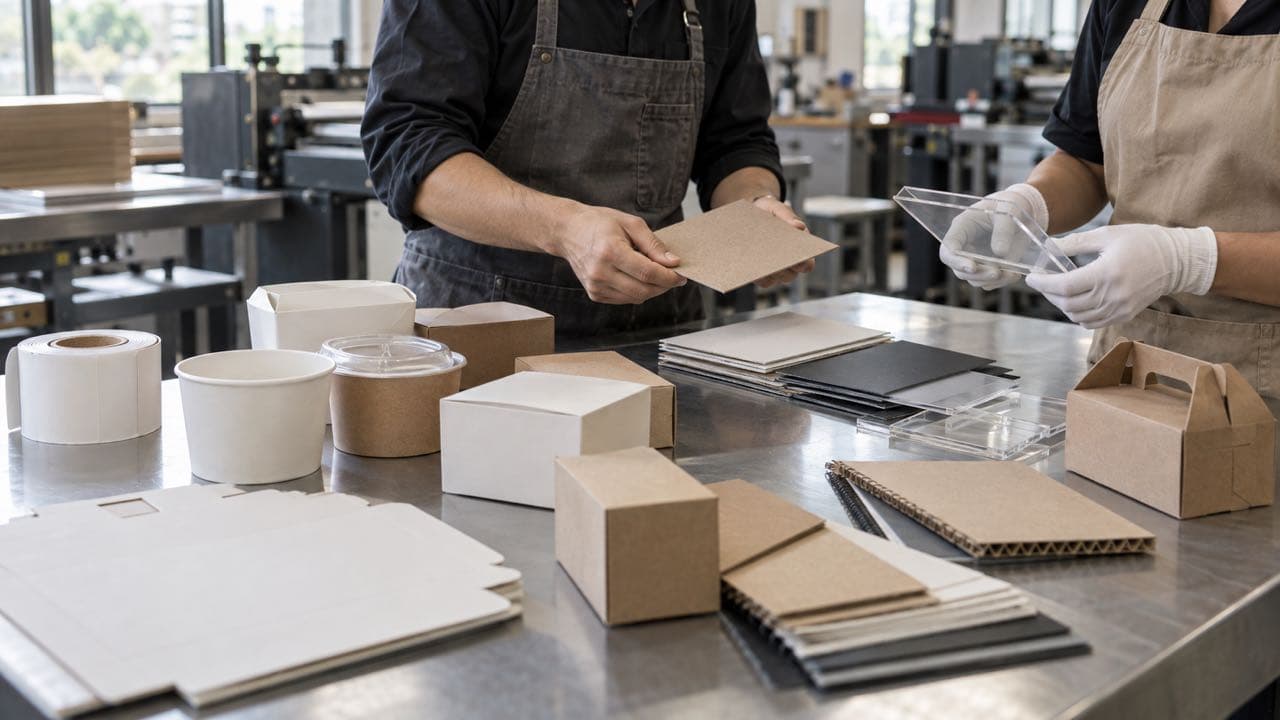
Paper samples of different weights beside a corporate sheet. Illustrative image generated with artificial intelligence.
What letterhead examples work for a business?
Compositions that answer the document’s purpose work better than those that fill every available space. A business sending lengthy proposals usually needs a discreet header; a brief introduction letter may allow a more visible identity, as long as readability remains the priority.
A restrained example can keep the brand at the top and group details in the footer. Another can use a side band if it preserves a comfortable writing area. Corporate stationery printing turns that design decision into a defined paper, ink, and quantity.
How should paper be chosen for company letterhead?
Paper is chosen according to frequency of use, printing method, and the feeling the document should convey. Grammage, the paper’s weight per square meter, affects its body, but it does not replace a test: a sheet may run well through one office printer and behave differently in another.
Environmental provenance also needs specific evidence. In ANDIGRAF’s sector survey using 2024 data, ISO 9001, FSC, and Earth Pact were the certifications most often mentioned when buying paper; a label supports a purchase only when the supplier provides a current certificate and the applicable scope. Colombia’s Ministry of Environment includes NTC 6038 for printed materials and NTC 6019 for pulp, paper, cardboard, and related products within the Colombian Environmental Seal.