
By Azabache Producciones on
Material alone does not exempt eco-friendly packaging from the plastics tax: a certification valid for one year is required
For imported single-use plastic packaging, composition and supporting records can change how the tax is treated.
Packaging with a sustainable appearance does not automatically acquire a specific tax, health or environmental status. For imported single-use plastics, composition and supporting records can change how the tax is treated. That distinction matters from a food container's design through its entry into the country.
IPUSUI is Colombia's national tax on single-use plastic products used to contain, wrap or package goods. A label, tape or plastic strap may form part of the retail unit assessed as packaging. The analysis therefore extends beyond the main container.
Concept 011996 of Colombia’s tax and customs authority (DIAN), published on 21 July 2026, clarified that the Circular Economy Certification makes IPUSUI non-accrual effective in the cases it covers. The certification supports certain imported plastics; it is not an automatic label for every printed package.
Why can eco-friendly food packaging require records in addition to its material?
The answer depends on whether the item is an imported single-use plastic product and on the condition claimed for the tax. A trade name, natural colour or recycled-looking finish does not replace records of the material and its use. The actual item, its function and applicable support define the case.
DIAN states that the National Environmental Licensing Authority (ANLA) issues the Circular Economy Certification and that it remains valid for one year from issuance. A current certification has a time-bound scope and must correspond to the item being presented. The supplier and project determine which records are relevant.
What changes for eco-friendly packaging for coffee, desserts and other foods?
Coffee, desserts and other foods may require packaging with different preservation, barrier or hygiene functions. The package's intended use matters as much as its material when determining whether an exception may apply. Some packages for wet foods or animal-origin foods may need single-use plastic for hygiene or safety.

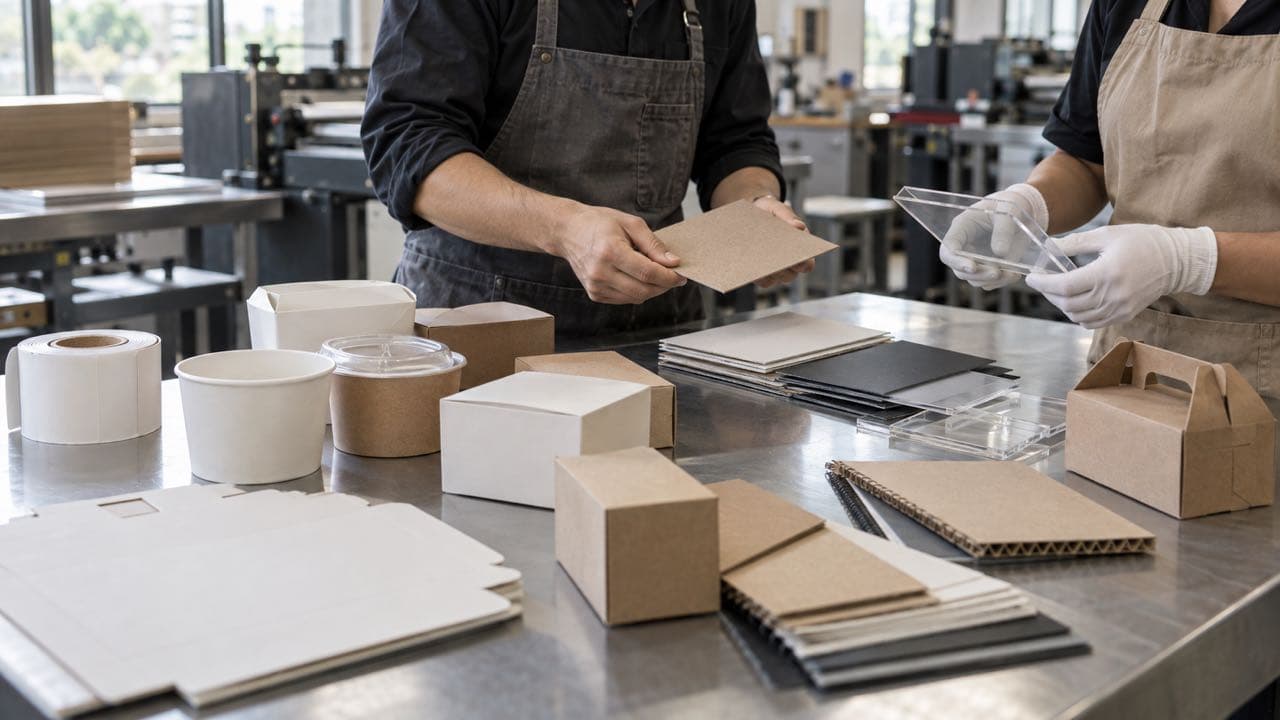
Designer reviewing packaging samples for coffee and desserts. Illustrative image generated with artificial intelligence.
Joint guidelines from Colombia's Ministry of Environment and Sustainable Development and DIAN, dated 19 February 2026, include certain cases with those needs among the exceptions. An exception is not presumed simply because food is sold; the item's characteristics and records must support it. In the development of product packaging and labelling, material and end use are defined before the piece goes into production.
Is eco-friendly packaging for cosmetics and soaps assessed the same as food packaging?
Not necessarily. A container for cosmetics or soaps can have a different use, retail unit and technical requirements from a food package. A packaging condition does not carry from one product category to another merely because both use plastic. Each reference needs its own assessment of material, function and supporting record.
To obtain the certification, Decree 509 of 2026 requires minimum content that may include the percentage of recycled material certified by a body accredited by the National Accreditation Body of Colombia (ONAC). A claim about recycled content needs technical support when it is used for certification. Where applicable, documentary evidence of the collective waste-management plan is also included.
What happens to labels, tapes and plastic straps in the retail unit?
These items are not always accessories outside the package. If a plastic label, tape or strap makes up the final consumer retail unit, it forms part of the packaging to be assessed. This helps prevent the review from focusing only on the bottle, tray, bag or box.
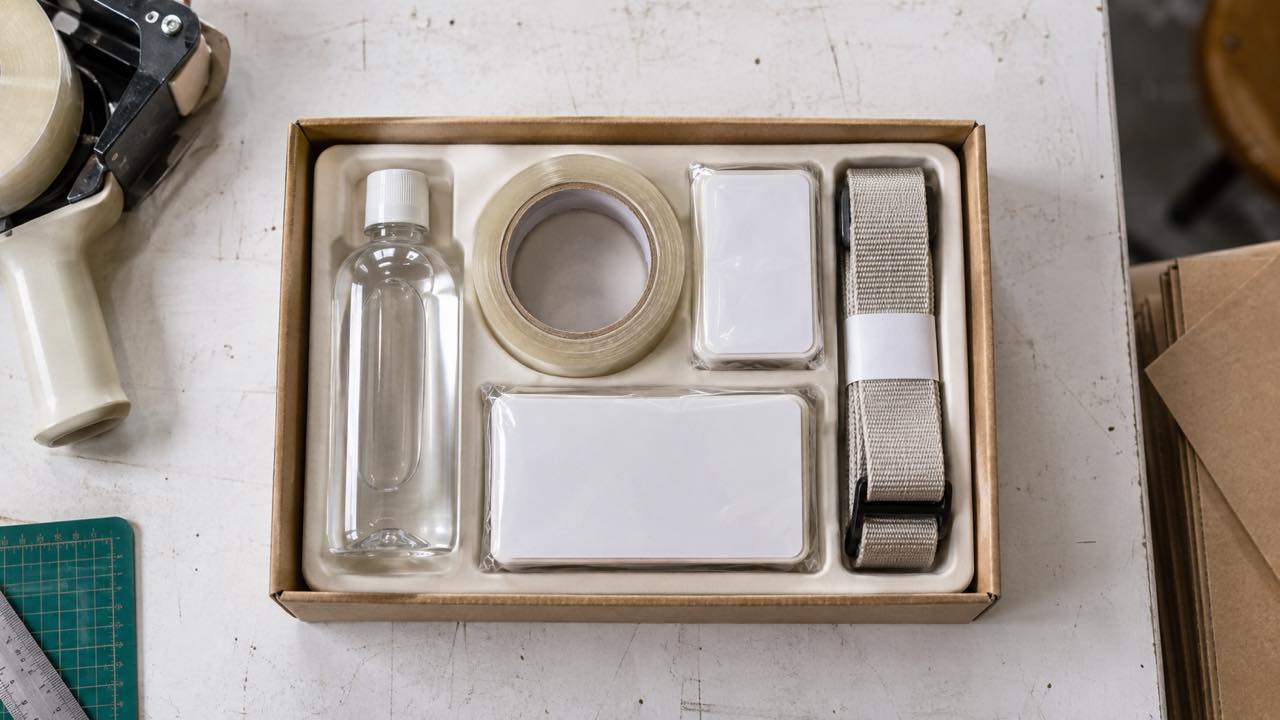
Label, tape and strap beside a container and tray. Illustrative image generated with artificial intelligence.
The distinction matters when components arrive imported or are imported together with the goods. Records must describe the product and demonstrate the condition claimed for the relevant case. A design with fewer components can make the retail unit easier to read, but it does not replace that support.
When does the tax not accrue on an import of single-use plastic?
An importer that exclusively imports single-use plastic products legally excluded from IPUSUI has no tax accrued on those operations, as DIAN clarified in June 2026. The legal exclusion applies to operations that meet its conditions, not to any package because it looks eco-friendly. Support must be kept for every applicable situation.
The same approach avoids presenting as universal characteristics that depend on a specific material and use. A package may need separate assessment for recyclability, compostability, food contact and tax treatment. An informed decision begins with a technical data sheet and current supplier records, alongside the package's actual function.