By Azabache Producciones on
A dynamic QR can prevent reprints: the card must be tested after finishing
A card can open an updatable portfolio, but its code needs clear space, contrast, and a test on the finished printed piece.
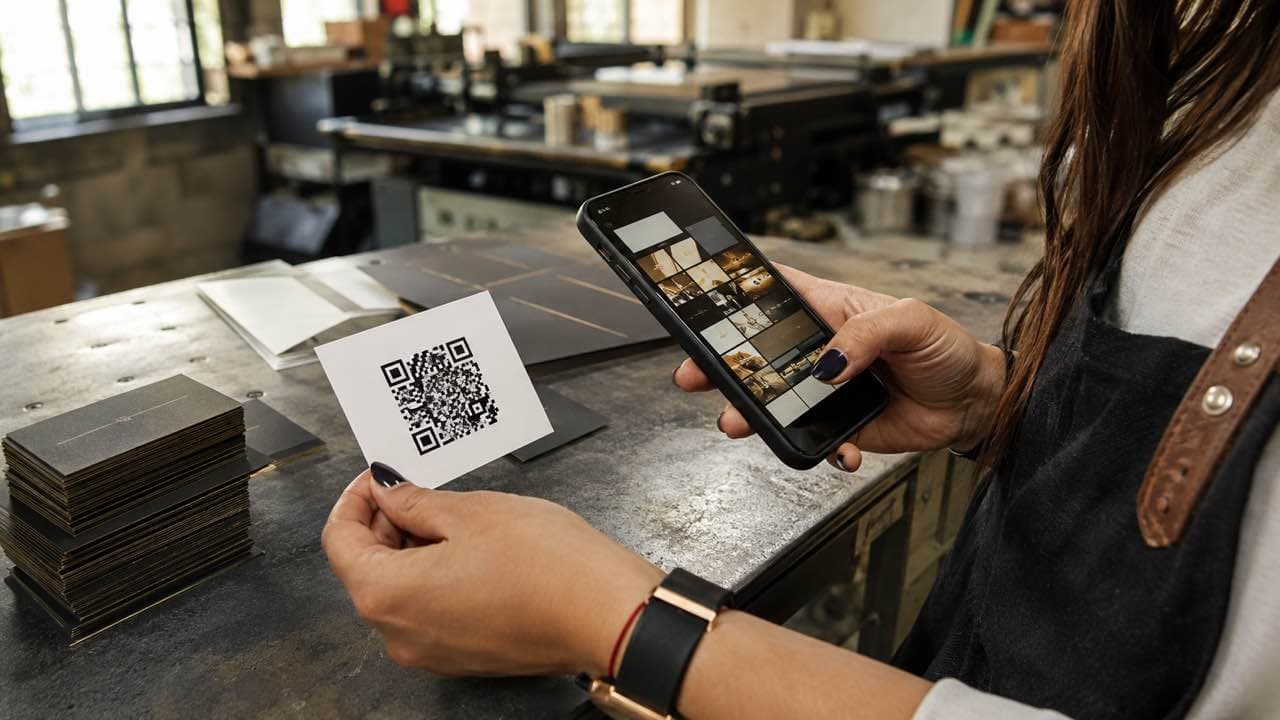
A printed card no longer has to end with a phone number and an email address. A QR code can lead to a portfolio, calendar, or contact card, provided the destination is useful, the print is readable, and the link remains active.
The practical difference appears with a dynamic QR code, whose destination can change without altering the printed symbol. In a 2025 international survey, 69% of respondents changed their QR destinations at least once a month; this is a global signal, not a Colombian measurement, according to Bitly's study.
That flexibility does not eliminate the technical work. The card must be tested after printing and finishing, because size, contrast, clear space, and any treatment near the code can affect scanning.
How do business cards with QR codes work?
The QR turns a phone camera into an access point for a digital destination: a page, portfolio, calendar, or form. With a static code, the destination is embedded in it; with a dynamic one, a redirect allows changes without reprinting, as long as the domain or provider remains active.
Looking right on screen is not enough. The ISO/IEC 18004:2024 specification covers matters such as format, dimensions, error correction, and production quality. This makes QR scanning a production control, not a decorative detail.
Documentation from DENSO WAVE, the system's creator, calls for a four-module clear space around the symbol. That band must remain free from text, frames, and finishes; a module is each small square that makes up the QR code.
More error correction can help with dirt or damage, but it also increases the code's data. The choice must be checked at final size: scan several finished units using different phones and reasonable lighting conditions before approving the entire print run.
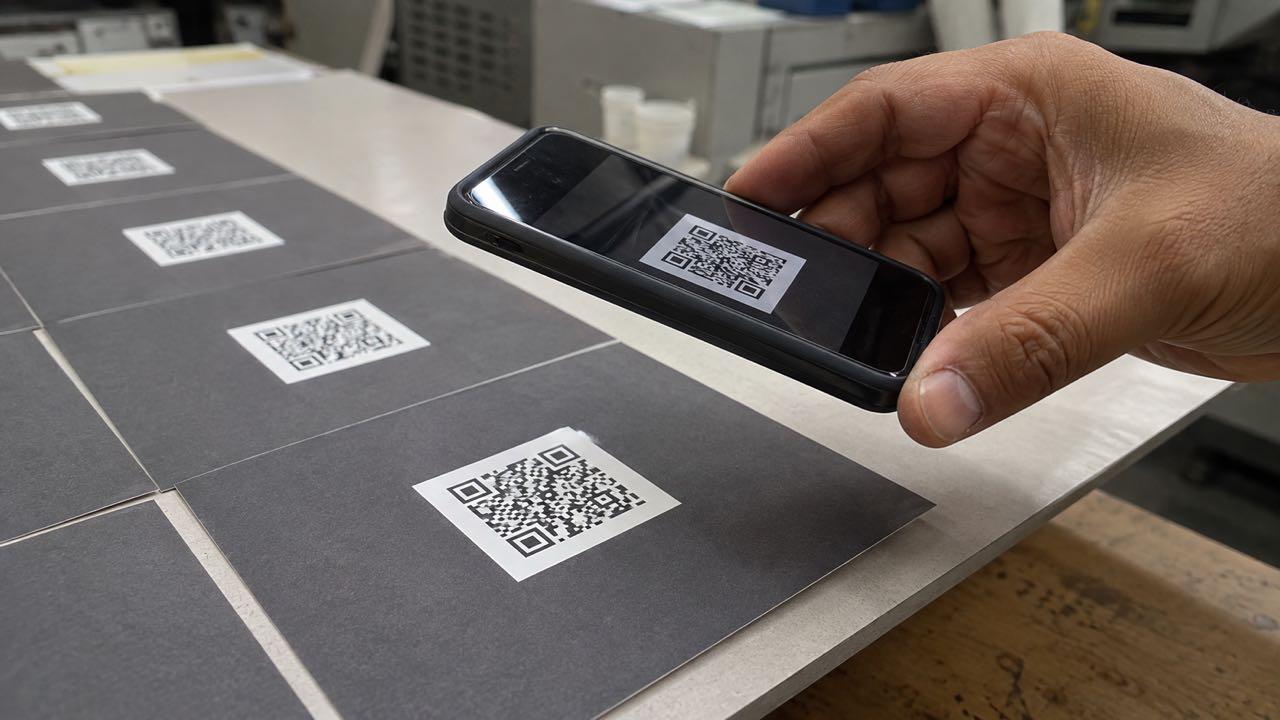
Phone scanning the QR code on a printed card during a quality test. Illustrative image generated with artificial intelligence.
What should a company's business card include?
The card should identify the person and the company before relying on the QR. A name, role, brand, and visible contact method remain useful if there is no connection or the camera fails. The code should add a clear action instead of needlessly duplicating everything already printed.
Set one priority: view work, save the contact, book an appointment, or request information. Short copy beside the code should preview what scanning will do. The destination should also load properly on mobile and preserve the company's visual identity.
If the QR opens a form, request only necessary information and explain its use. In 2025, Colombia's SIC reiterated the necessity principle for personal-data processing. An exception tied to a legal duty does not automatically authorize every commercial form.
What are the dimensions of business cards?
Colombia has no mandatory size for a business card. The 85 × 55 mm format is the most frequently ordered according to data from a British printer, but that does not make it a local standard. The right size depends on the content, on the filing system where the card will be kept, and on the visual concept.
QR size must be defined alongside its amount of data, error correction, contrast, and clear space. Do not shrink the symbol simply to free up room: make a full-size sample and test the finished piece, especially with lamination, embossing, foil, or spot UV nearby.
Spot UV is a glossy coating applied only to selected areas. Foil is a metallic film transferred onto parts of the design. Both can create visual hierarchy, but should remain outside the QR's functional area until a test confirms they do not interfere with scanning.
Where can business cards be printed in Medellín?
Look for a producer who reviews the file, material, finish, and QR readability as one job. The relevant capability is not printing alone: they should guide a physical test, maintain consistency across names or roles, and explain which variables change the quote and delivery time.
At Azabache, the conversation can begin with identity and end with a verifiable sample. The corporate stationery service in Medellín places cards within a system of materials. Before ordering, confirm materials, finishes, personalization, and availability for the specific project.
Andigráfica 2025 highlighted automation, personalization, digital and offset printing, and circular approaches in Colombia. These are useful criteria for asking about the production workflow, but they do not confirm that a specific supplier offers every process or that one technology is always best.
For a responsible option, review the whole specification: paper, ink, and finish. Saying that the paper is recycled does not fully describe the card's impact. An FSC mark should not be promised without verifying the chain of custody and authorization that apply to the supplier and final product.
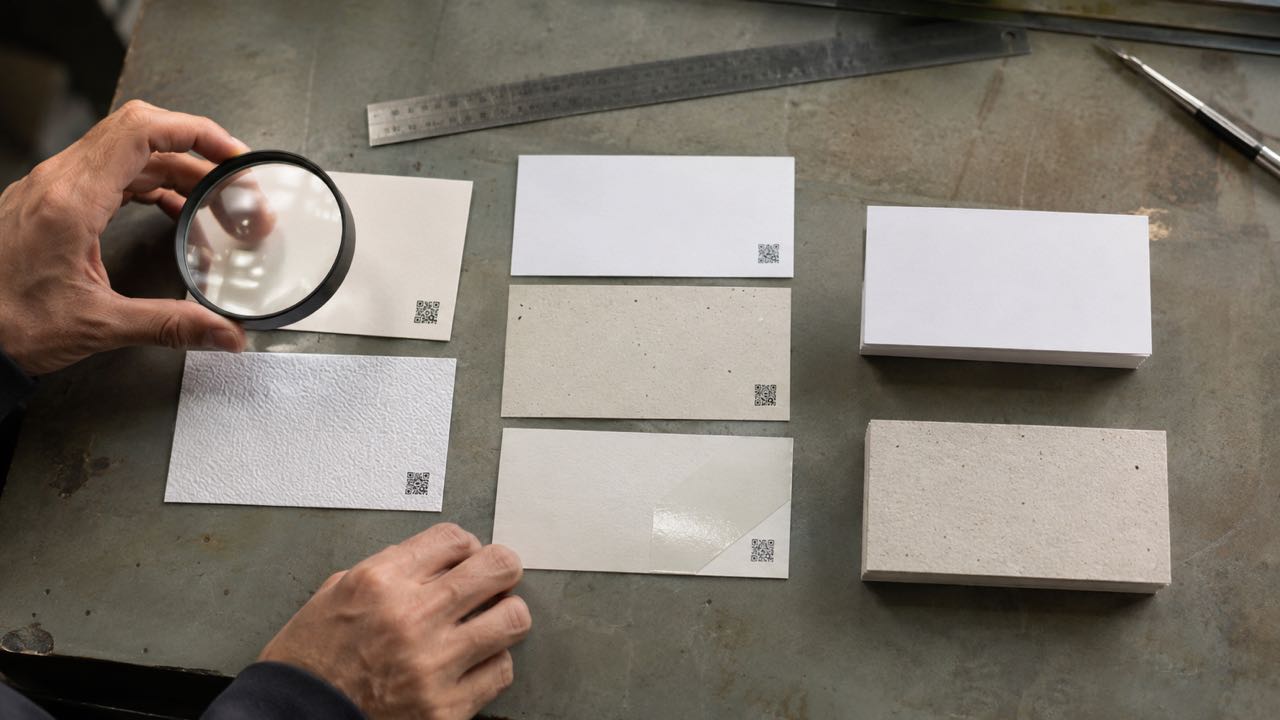
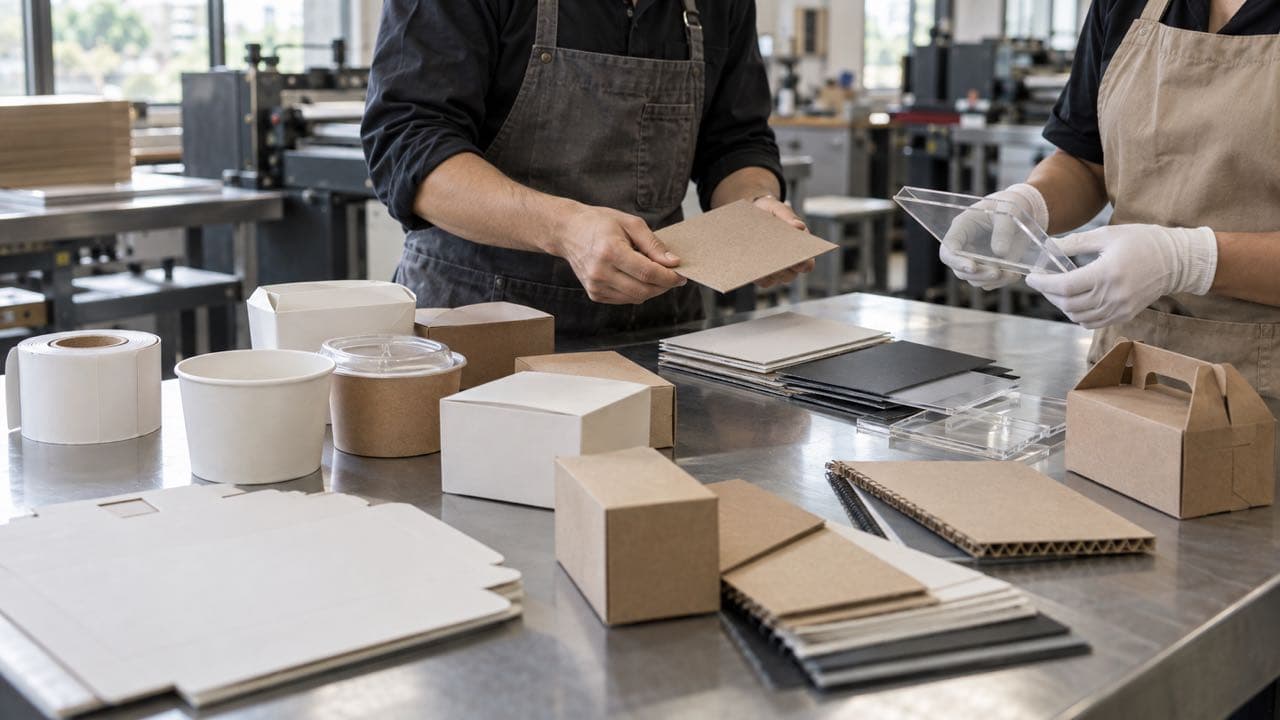
Business card samples in several papers and finishes on a production table. Illustrative image generated with artificial intelligence.
How much does it cost to print business cards in Medellín?
The reviewed evidence contains no public, comparable price that supports a fixed figure for Medellín. Cost changes with quantity, dimensions, printed sides, paper, finish, design, personalization, taxes, and delivery. A number without those specifications may look precise, but it cannot support an equivalent comparison.
For a quote, provide the size, number of versions, quantity per person, one- or two-sided printing, and delivery city. Grammage is the weight of paper per square meter. Also state whether you need a physical proof and whether the QR will be identical or variable across team members.
- File: state whether the design is ready or needs adaptation.
- Material: request the proposed paper's name, grammage, and appearance.
- Finish: specify lamination, spot UV, foil, embossing, or a special cut.
- Validation: agree on how color, data, and QR readability will be approved.
- Destination: confirm who maintains the redirect and under which conditions.
A dynamic QR code may involve costs or terms from the platform maintaining the redirect. Ask about duration, editing, and link ownership before printing. If that service stops operating, the card may retain its symbol but lose the intended destination.
Is it better to order 100 business cards or one thousand?
The right quantity depends on how often details change and how the cards will be used. One hundred may reduce surplus when roles rotate or for an initial test; a thousand may suit stable information and frequent distribution. There is no universal threshold between digital and offset printing.
Digital printing is often relevant for personalized versions or short quantities, while offset can be assessed for larger volumes. The comparison must use the same specification and actual quotes, because finish, number of versions, and setup change the cost relationship.
Before multiplying the quantity, give a sample to someone unfamiliar with the project. Ask them to identify the company, understand the action, and scan the code. An effective card combines visible information, a useful destination, and verified readability; only then does it make sense to choose the final run.