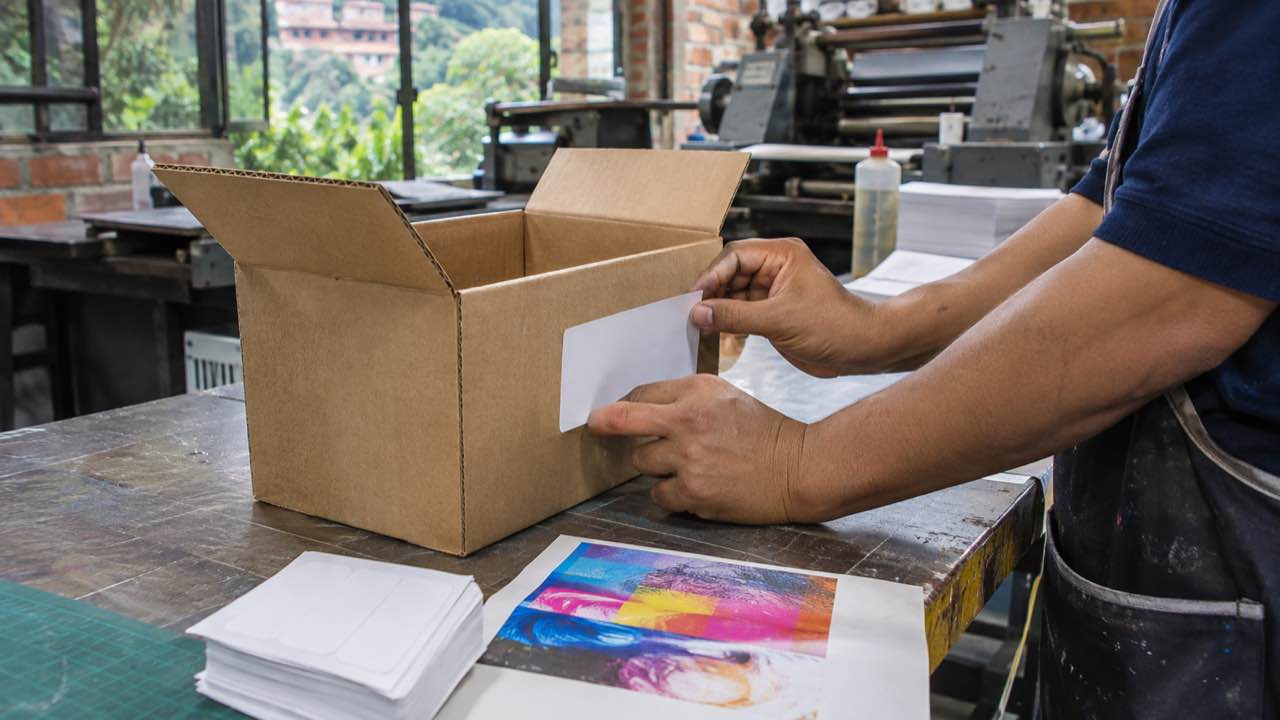
By Azabache Producciones on
Envelope paper: Colombia lifted antidumping duties on Brazilian bond after domestic production ended
With no domestic bond-paper mill left, Resolution 660 removed the duties on Brazilian paper; each envelope still depends on paper, printing, converting and delivery.
The removal of antidumping duties, measures that charge certain imports, on Brazilian bond paper has brought the input back into purchasing conversations. The measure does not turn envelope pricing into a single figure or guarantee an immediate reduction. A corporate envelope combines paper, printing, converting and delivery, and each part can change differently.
Colombia's Ministry of Trade, Industry and Tourism issued Resolution 660 of 2026 on September 21, removing the final duties on two Brazilian bond-paper tariff lines, effective upon publication in the Official Gazette. The reason: Carvajal Pulpa y Papel, the only domestic maker of that paper, shut its Guachené (Cauca) plant on July 31 and requested judicial liquidation, leaving no national production to protect. The trade change affects one possible quote component, not the final value of every envelope. The resolution is available in the text published by Andigraf.
The distinction matters for companies quoting custom envelopes in Medellín, whether white, black or for correspondence. There is no comparable per-unit price between printers when paper, run size or finish changes. The useful reading separates the components instead of assigning the total to a single trade decision.
What should an envelope quote in Medellín separate?
A clear quote distinguishes paper, printing, converting and delivery. Separating these four components shows where the value changes when size, run size or closure changes. It also prevents an input variation from being confused with a change to the whole order.
Converting is the process that cuts, folds and glues an envelope until it is ready for use. The same paper can generate different costs when converting or the requested finish changes. A black envelope, for example, may require different printing decisions from a white one, depending on the design and ink.
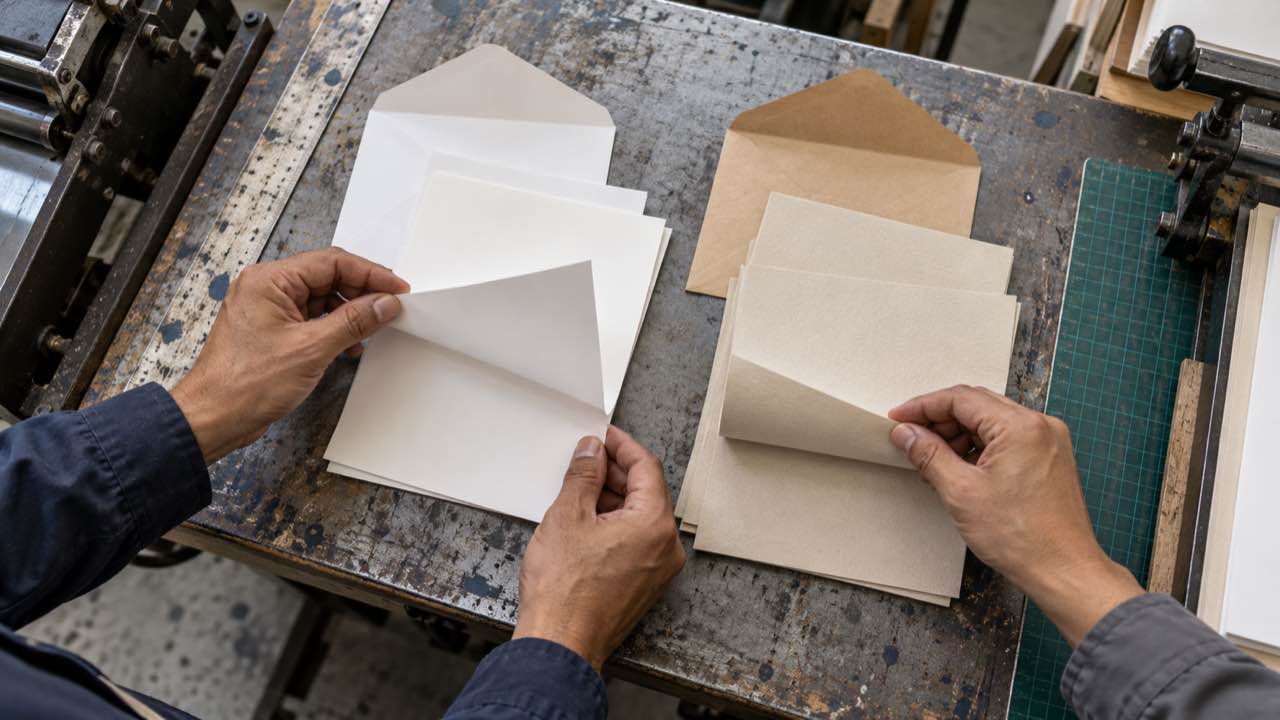
Hands compare envelope and paper samples on a table. Illustrative image generated with artificial intelligence.
Comparison becomes more precise when proposals describe paper type, dimensions, quantity, printing and delivery in equivalent terms. Lead time depends on the run size and finish, so it should be written into the quote. Two similar amounts can then be read together with the actual scope of each production.
Does ending antidumping lower corporate-envelope prices?
There is no rule that converts the removal of duties into an automatic reduction per envelope. The final value depends on production and logistics decisions in addition to the paper's origin. Any effect can differ by supplier, volume, inventory and the conditions of each project.
The ended measure, Resolution 364 of December 30, 2025, set a five-year base price per net kilogram for that paper: USD 1.08 for Suzano, USD 0.97 for Sylvamo and USD 1.25 for other exporters. The removed rule does not set a final rate for envelope printing, converting or delivery. That distinction appears in the compiled text of Resolution 660 of 2026.
Which materials and finishes suit paper envelopes?
The answer depends on the use: correspondence, document delivery, brand presentation or internal distribution. Envelope design should be defined alongside paper and finish because those choices change the result and the quote. The graphic sector brings together paper, inks, adhesives and finishes as parts of one production decision.
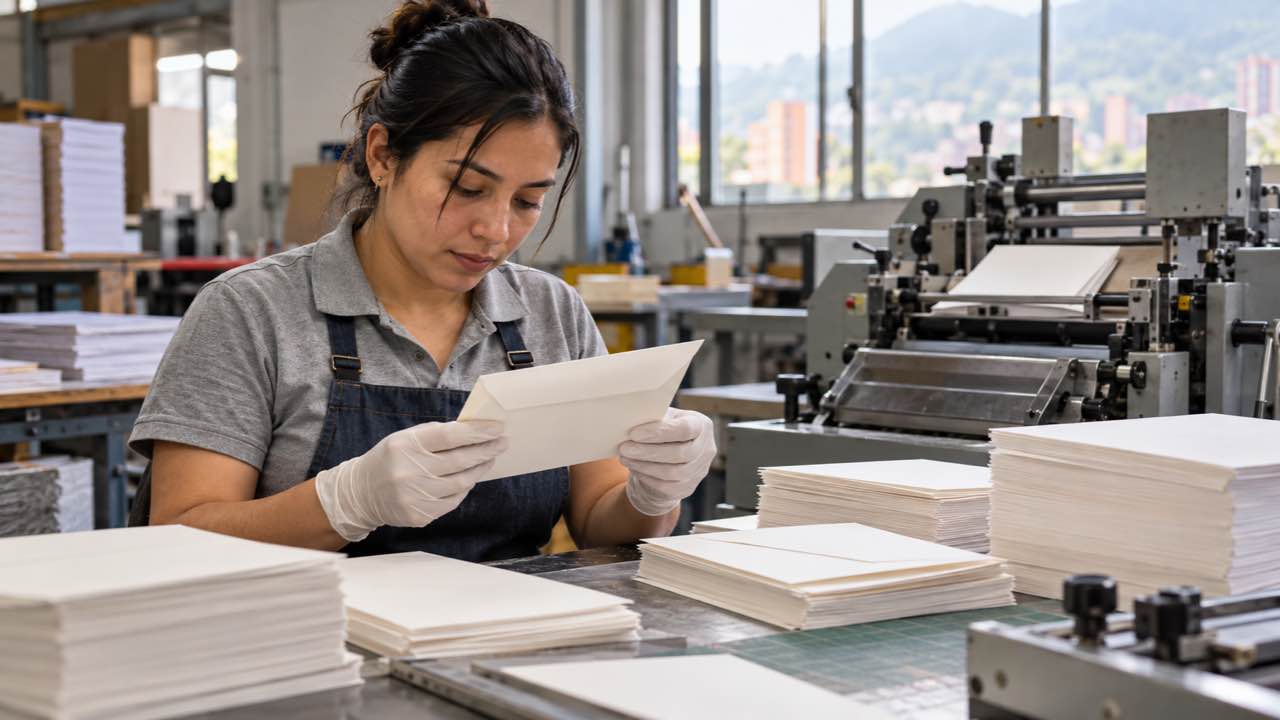
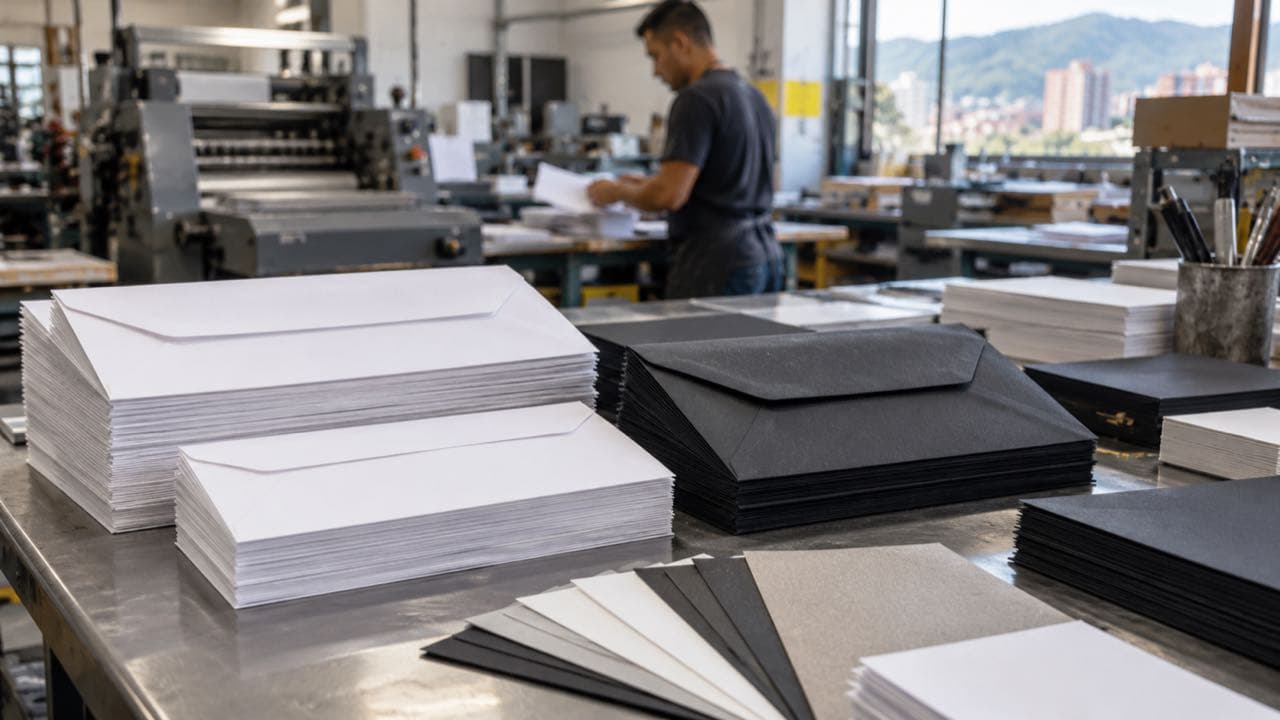
Worker inspects finished envelopes at a graphic finishing table. Illustrative image generated with artificial intelligence.
Recycled content, chlorine-free bleaching (totally chlorine-free or elemental-chlorine-free) and reducing unnecessary plastic appear as sustainable purchasing considerations in a public stationery process. These criteria are not a general requirement for every private company or proof of a supplier's characteristics. The document from Colombia's National Public Procurement Agency – Colombia Compra Eficiente explains their scope.
To organize that conversation, a proposal for corporate stationery for Medellín businesses can begin with the envelope's use, run size and artwork specifications. The most useful decision compares options with the same scope for paper, printing, converting and delivery.