By Azabache Producciones on
More than 280 brands were scheduled: prepress prevents changes before printing
A trade-show piece is not ready when its design is approved: format, colour and finish must be defined before it moves into production.
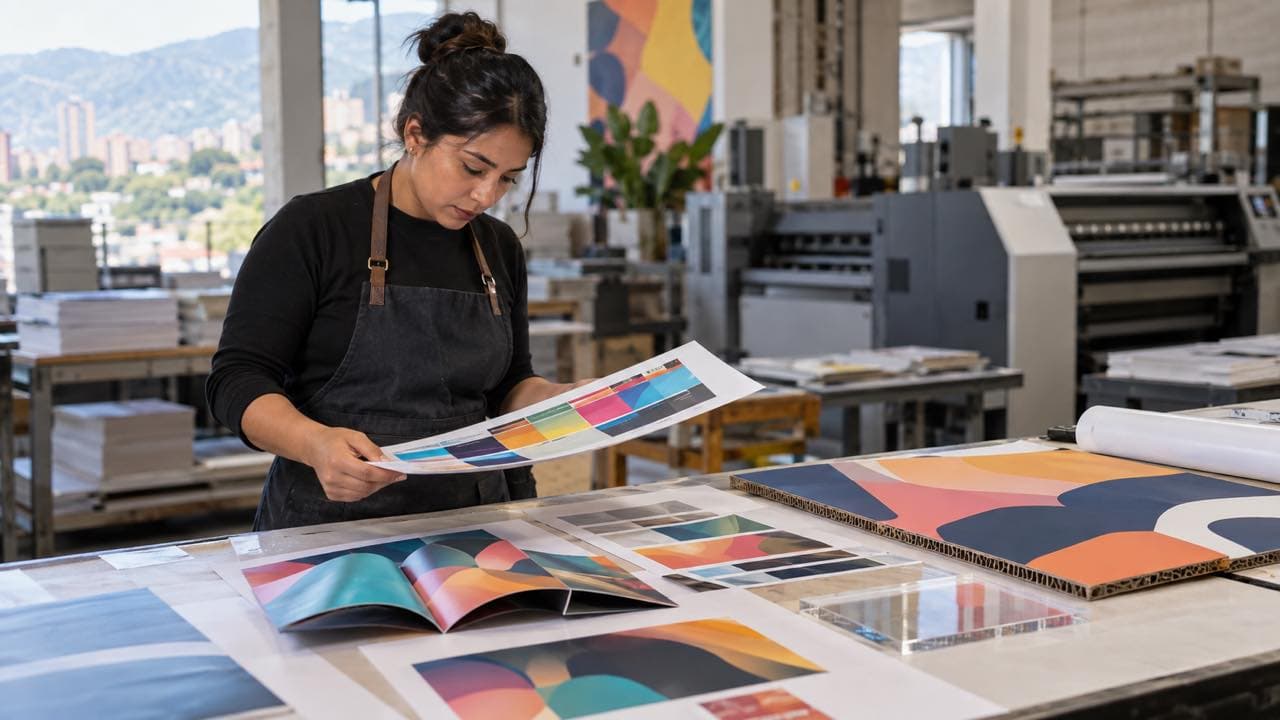
A trade show does not end at the stand. The piece that starts a conversation must later be reproduced without its colours, dimensions or messages changing. That move from idea to production is decided before the file is sent to print.
The programme for La Feria de Diseño Medellín announced more than 280 brands and more than 35 satellite events for its 2026 edition. That setting brings a recurring need for brands into focus: an identity that works equally well in a brochure, a wall graphic and a follow-up piece.
Graphic design for print turns that identity into files suited to production. Technical file preparation for print brings together decisions about dimensions, colour, images and finishes before a job goes to press.
What should a company define before commissioning graphic design for print?
Before design begins, the piece's purpose, where it will be seen and the information that must survive a quick read should be clear. The same campaign rarely keeps the same visual hierarchy across every printed format. Size, viewing distance and material change what people can read.
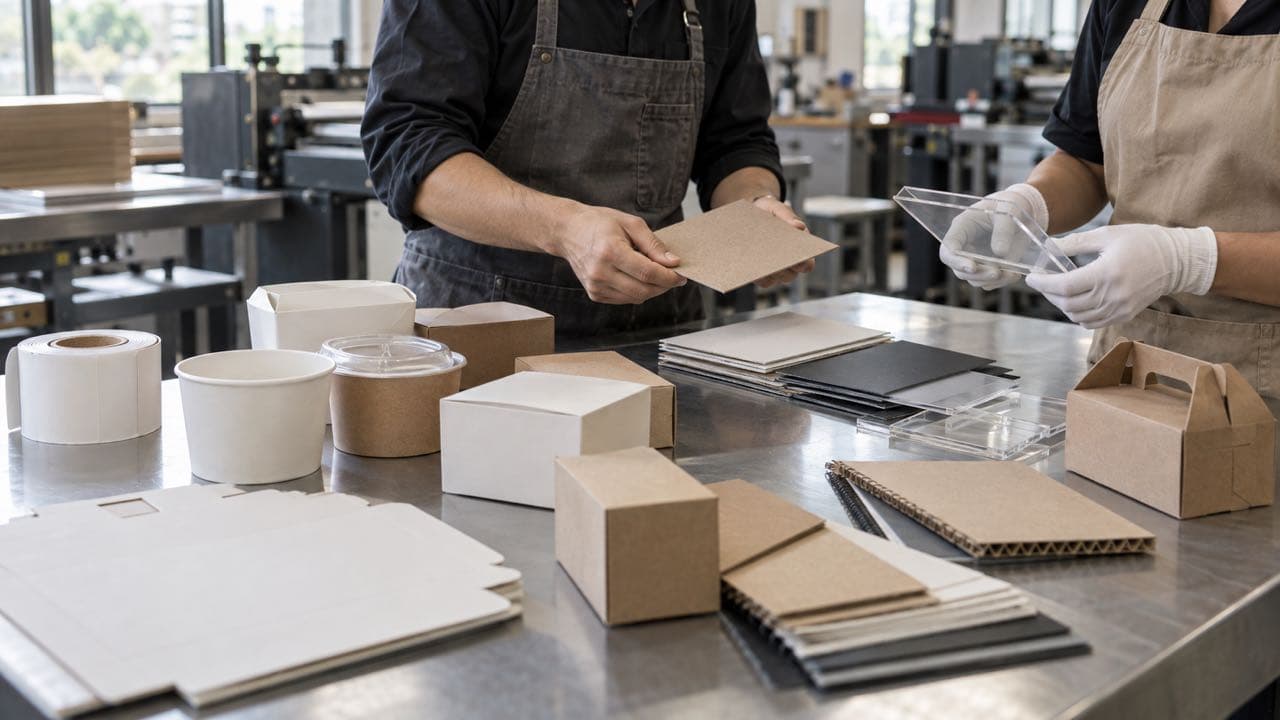
The substrate—the material that receives the print—also comes into focus when it affects appearance or use. Paper weight, expressed as grams per square metre, and finishing are confirmed with production because they vary by piece, run size and supplier availability.
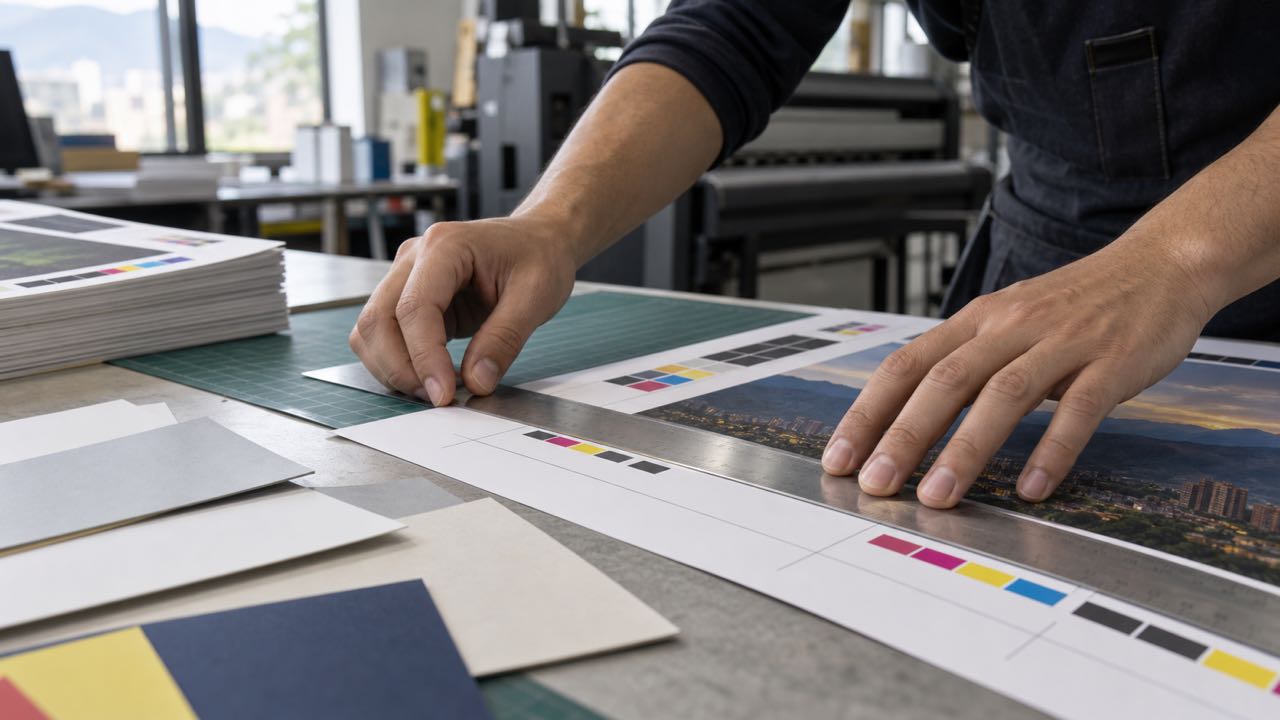
Printed mock-up with crop marks and bleed on a prepress table. Illustrative image generated with artificial intelligence.
- The piece's purpose: to inform, direct, display or sustain later contact.
- Its final format and setting: a handout is not read like a wall graphic.
- The brand's required content, including logos, contact details and calls to action.
How can a graphic-design-for-print file be delivered without slowing production?
A production-ready file defines the final dimensions, images and elements that reach the edge. Bleed is the extra margin trimmed away at the end; it prevents unexpected white edges. A preflight review reduces last-minute changes, but it does not replace production validation.
Colour also needs a technical conversation. CMYK is the four-ink system used in printing; a colour seen on screen can change when reproduced on paper, vinyl or another material. Fonts, linked images and final versions should accompany delivery according to the agreed workflow.
Which promotional materials are worth designing for a trade show?
The selection depends on how a brand expects to meet visitors, buyers or partners, not on a fixed list of print items. A trade show may need one piece that stops the eye and another that preserves the details after a conversation. The set works when each format has a distinct task.
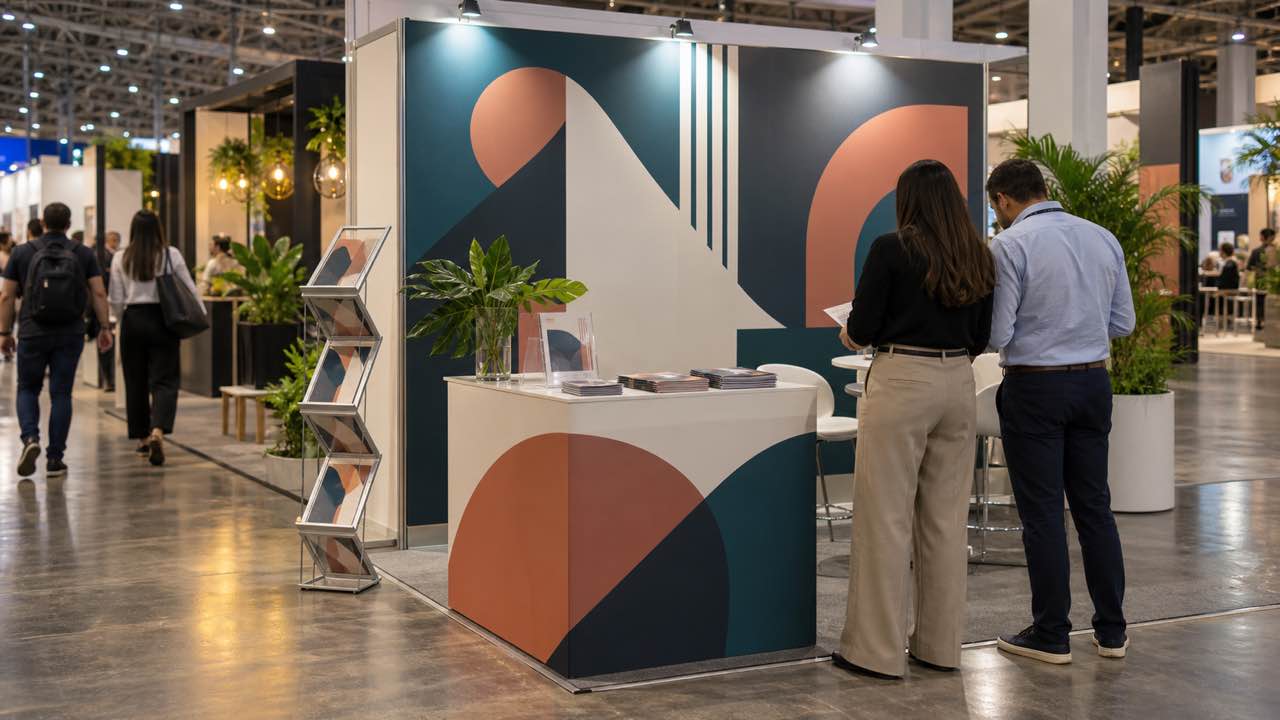
Trade-show stand with a large graphic panel and coordinated printed brochures. Illustrative image generated with artificial intelligence.
- A visibility piece, to identify the brand from the venue's circulation areas.
- Brief reference material, to explain an offer without putting the whole pitch on paper.
- A follow-up piece, so a contact can resume the conversation after the trade show.
How can promotional materials be adapted to printed formats for a stand?
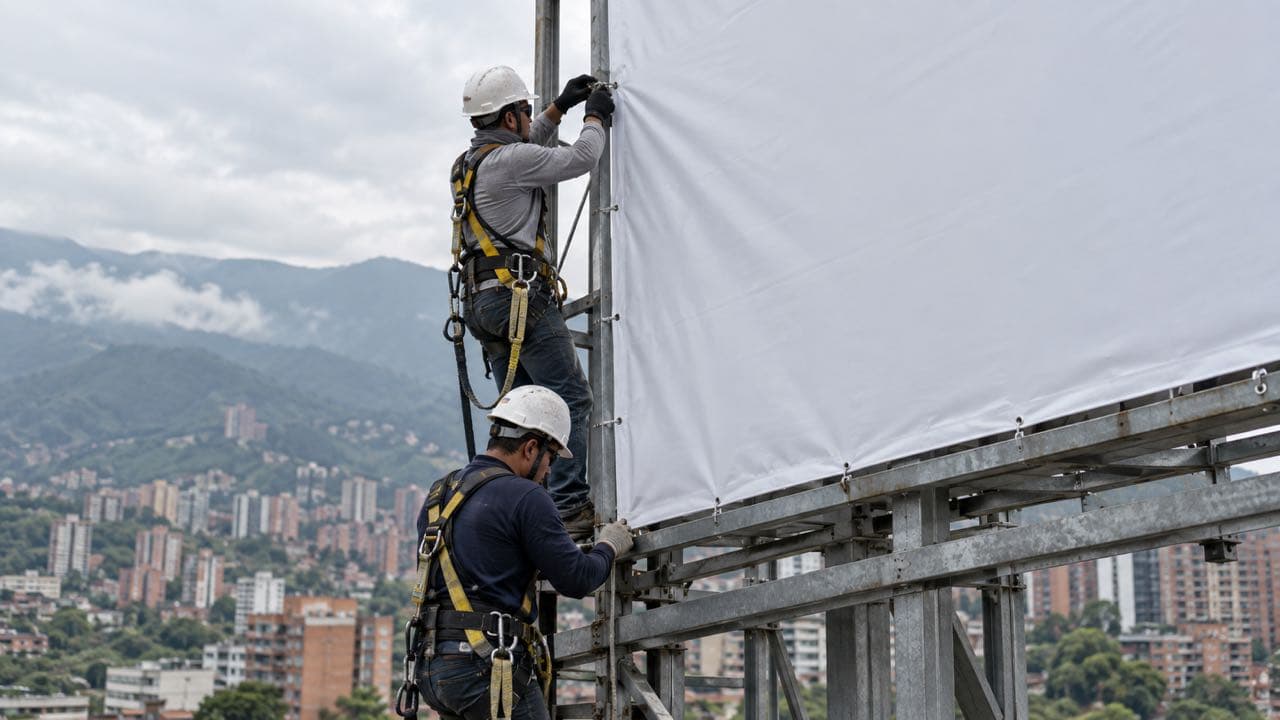
Adaptation begins with distance and movement: copy read from several metres away needs fewer words and more contrast than a sheet held in the hand. A large format is not a small sheet enlarged: its reading sequence must be rebuilt. Stand files and supporting print materials can therefore share one identity without sharing the same layout.
When a special cut is involved, a die line—the shape that cuts or scores the material—must be included from the design stage. Final approval also considers installation, finishing and quantities. There is no universal turnaround time or cost per piece: both vary with the run size, material and processes defined for the project.