By Azabache Producciones on
Printing books in Medellín starts with the print run: unit cost alone is not enough
A comparable quote starts with the same book: quantity, format, pages, paper, binding, finishes, and delivery.
The print run, or number of copies, is the first detail to settle before requesting a book quote. There is no universal unit price: it changes with format, page count, inks, paper, binding, finishes, file readiness, and delivery.
The decision matters in an active market. In 2025, 19,024 titles were published in Colombia, 16.2% more than in 2024, and 38.5 million copies were printed, up 12.3%, according to the Colombian Book Chamber. More production does not make two different quotes comparable.
A sound request describes the same product to every supplier and separates included work from options. It also states who supplies production-ready files, who handles publishing procedures, and how the proof will be reviewed before production.
Where can you print books in Medellín?
Choose a printer that can review the complete project before promising a price or date: run, finished size, pages, color, paper, binding, finishes, files, and destination. Being in Medellín can help coordinate proofs and delivery, but the right production capability must be confirmed for each book.
Start with a short, stable specification sheet. It should state quantity, dimensions, interior page count, cover characteristics, and delivery location. If a variable remains open, request clearly identified alternatives instead of allowing different assumptions to blend into one figure.
- Content: pages, final size, color or black and white, and file readiness.
- Materials: interior and cover paper identified by an available reference, not only a vague description.
- Finishing: binding, finishes, packing, destination, and delivery conditions.
- Validation: requested proof, person responsible for approval, and changes allowed before production.
To centralize that conversation, Azabache's editorial printing and publications service in Medellín is a contact point for presenting the specifications. Process, material, and schedule availability must be confirmed for the specific project.
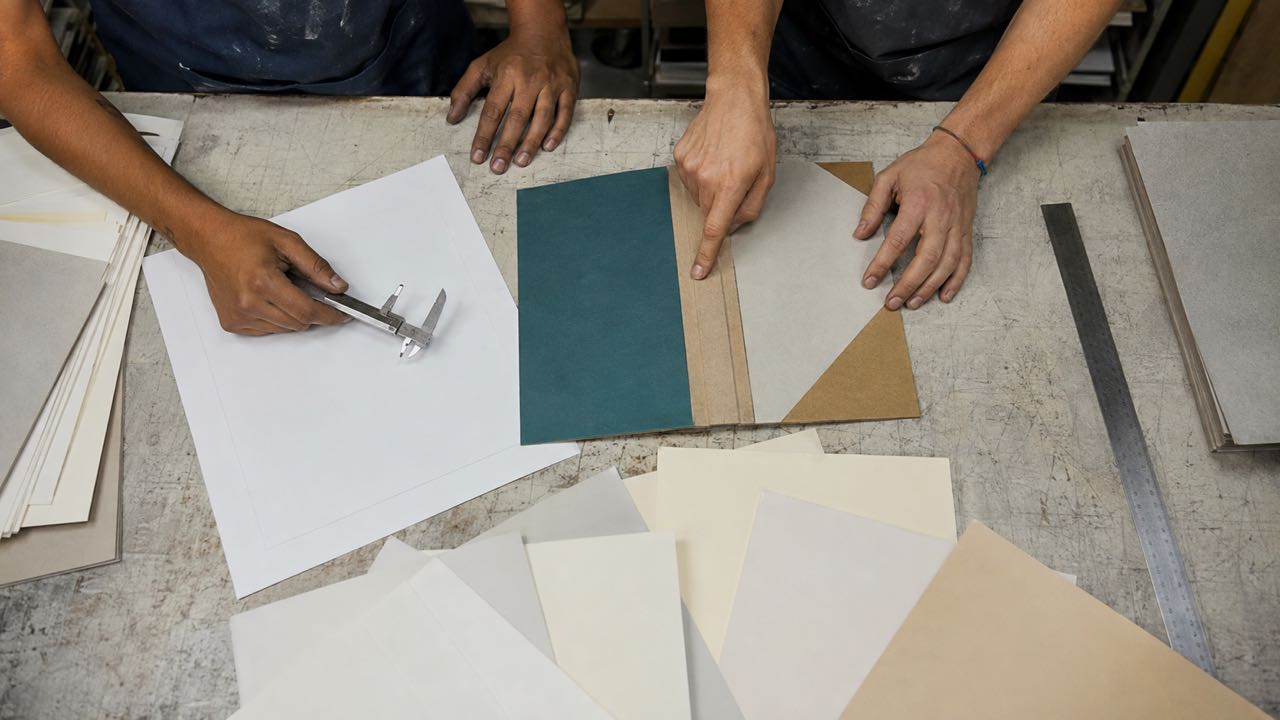
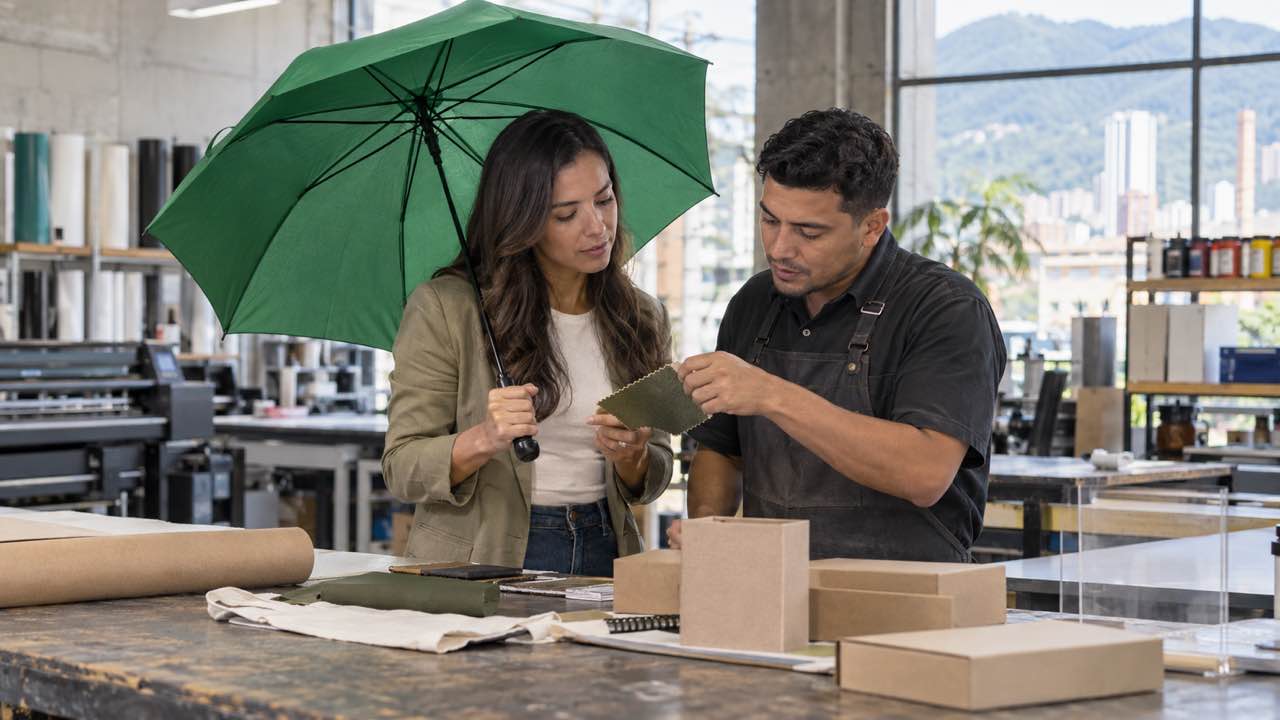
Paper samples, measuring tools, and a cover mockup on a specification sheet. Illustrative image generated with artificial intelligence.
What does an editorial book-printing service include?
A useful scope separates preparation, production, and delivery, while explicitly stating what the client supplies. Never assume printing includes editing, design, ISBN, barcode, legal deposit, proofs, transport, or storage. Each component should appear as included, excluded, or pending definition in the proposal.
An ISBN identifies an edition and is requested by the publisher; it is not usually the printer's responsibility. Since January 16, 2026, the published fee for registering a printed-book ISBN in Colombia has been COP 81,600 including VAT, while its barcode is free, according to the Colombian ISBN Agency.
The same source explains that Article 11 of Law 98 of 1993 provides that every book published and printed in Colombia must carry an ISBN for the publisher to invoke that law's benefits. This does not automatically make the printer responsible for the application.
Legal deposit is another obligation that should remain separate from commercial production. For print-on-demand works produced in Colombia, the National Library reports that two copies must be delivered within 60 business days of publication, public communication, or reproduction. The applicable quantity must be checked against the modality, place, and exceptions.
How should you compare book-printing prices?
Compare proposals built from identical specifications and review the total, not only the figure per copy. A difference may come from paper, quantity, binding, proofs, finishes, file preparation, or delivery. Without that breakdown, a lower price may describe a different book.
Ask for the offer's validity and assumptions in writing. There is no per-copy price that is comparable between printers: a published figure without a specification sheet would be misleading. Cost changes with the print run and the project's other decisions.
A minimum matrix for quoting the same book
- Exact number of copies and treatment of overruns or underruns.
- Finished size, interior pages, and cover characteristics listed separately.
- Paper by available reference and grammage, the paper's weight per square meter.
- Inks, binding, finishes, and type of proof included.
- File preparation, packing, transport, taxes, and estimated date, each identified.
It is also worth asking what happens if the page count or quantity changes after approval. An alternative is comparable only when it shows which variable changed and how it affected the scope. This prevents a choice between figures that look equivalent but conceal different products.
How do you choose where to print books?
Choose after confirming that the supplier understood the specification sheet, can explain its assumptions, and proposes validation before production. The decision should consider consistency, scope, communication, and delivery in addition to price. If a material, process, or environmental label is offered, request availability and evidence applicable to that order.
Digital printing and production inkjet are gaining ground globally for print-on-demand books and short runs. A Contiweb technical analysis links adoption to quick turnaround, small quantities, personalization, and less unsold inventory. This is a global trend reported by a technology vendor, not a Colombian market share or a confirmed Azabache capability.
If sustainability is part of the criteria, specify what you want to verify. A life-cycle analysis reviewed by Cerlalc assessed nine categories for offset and digital books in Colombia and concluded that certain papers and avoiding some finishes can significantly reduce environmental impact. The choice depends on the actual book, not an isolated label.
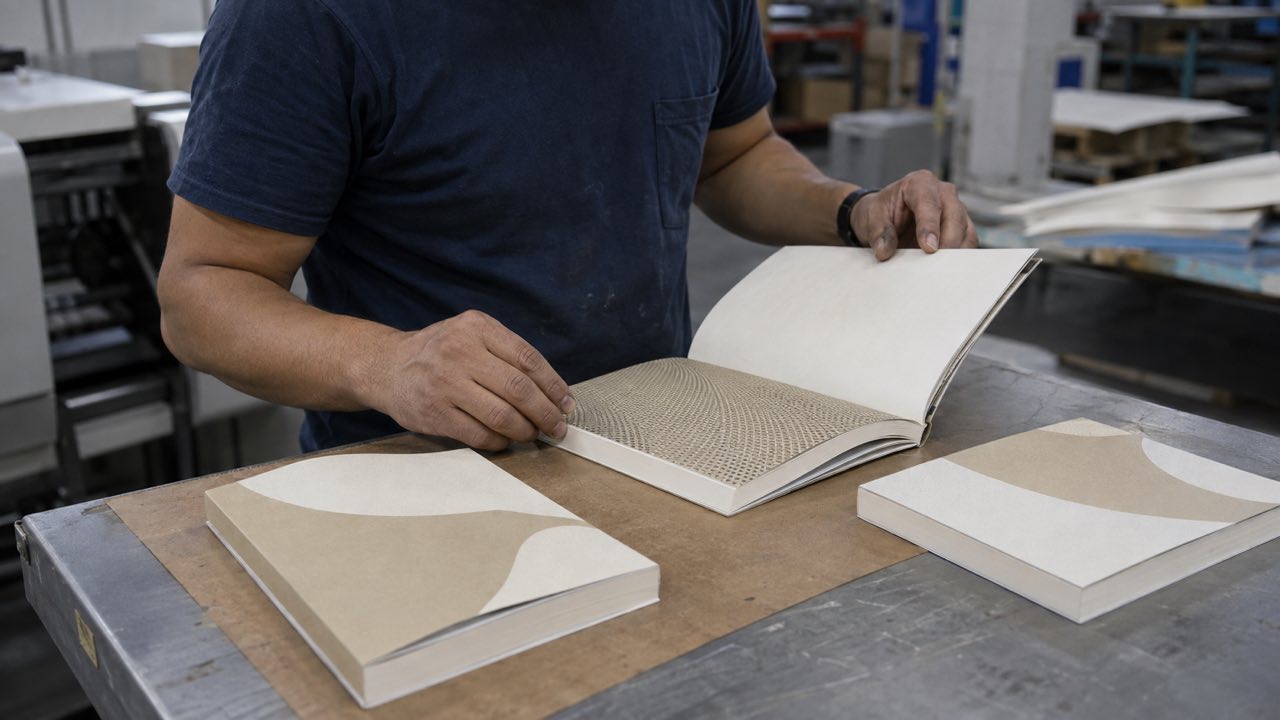
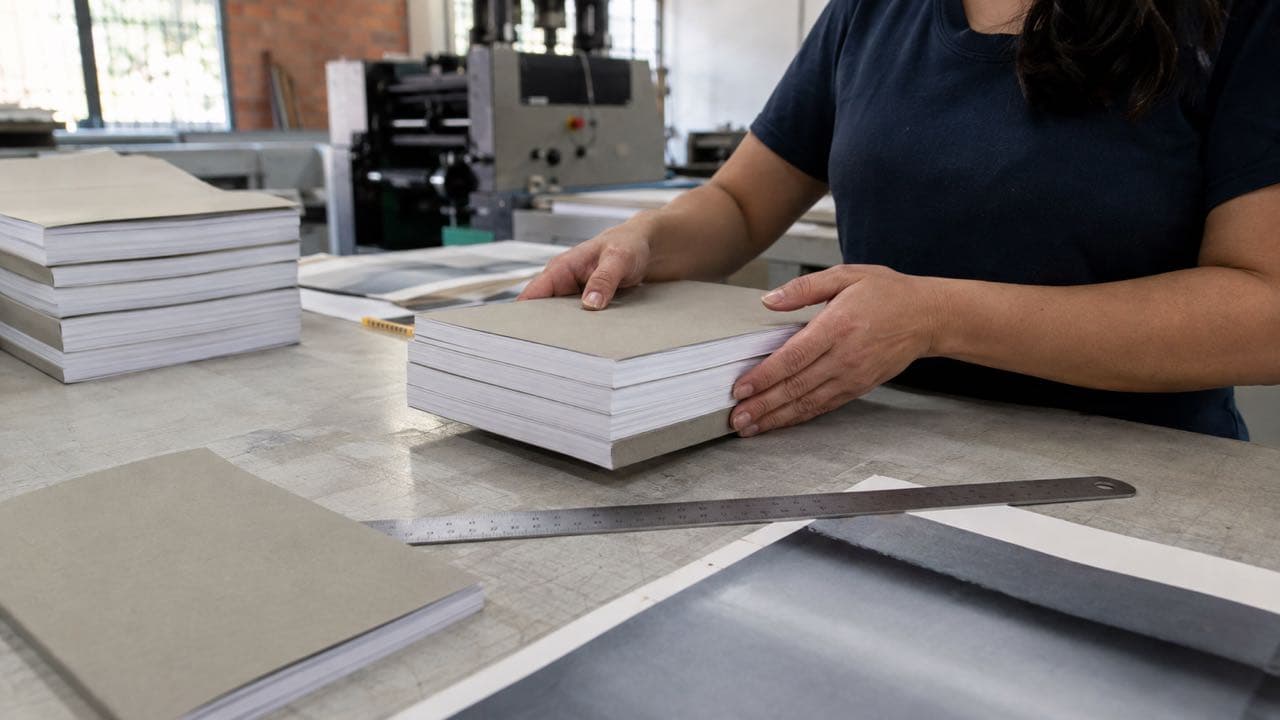
Person checking the binding, alignment, and covers of several printed books. Illustrative image generated with artificial intelligence.
Requesting “FSC paper” does not by itself demonstrate a certified chain. FSC-STD-40-004 covers sourcing, processing, labeling, and selling forest products as certified, FSC explains. Ask your supplier for the current certificate and its scope before announcing that a book is FSC.
Can affordable books be printed in Medellín without sacrificing quality?
Efficiency is possible, but “affordable” needs a concrete reference: total budget, useful quantity, and requirements that cannot change. The responsible route is to simplify decisions that remain compatible with the book's purpose and quote equivalent scenarios. No universal process, paper, or finishing combination guarantees the lowest cost.
Begin by separating essentials from preferences. Format, pages, color, cover, binding, and delivery can be evaluated as variables, provided every alternative preserves the expected function and uses confirmed materials. Do not promise specific papers, inks, or laminates without supplier inventory, compatibility, and a technical data sheet.
Do not save money by removing the review that can reveal a difference before the run. Define which proof will be supplied, what it can be used to judge, and who approves it. Quality should become observable project criteria, not adjectives such as “premium” that each quote may interpret differently.
The final comparison fits into one question: what will the publisher receive, in what quantity, under which specifications, and with which responsibilities resolved? Once that answer is written, the price has context. That sequence supports printing books in Medellín with verifiable expectations and decisions that remain sound from quotation through delivery.