
By Azabache Producciones on
Accessible braille directories: starting July 2027, public entities must mark common areas in braille
Colombia’s Law 2265 of 2022 takes effect on July 1, 2027, requiring braille in public entities’ common areas; tourism providers have duties too.
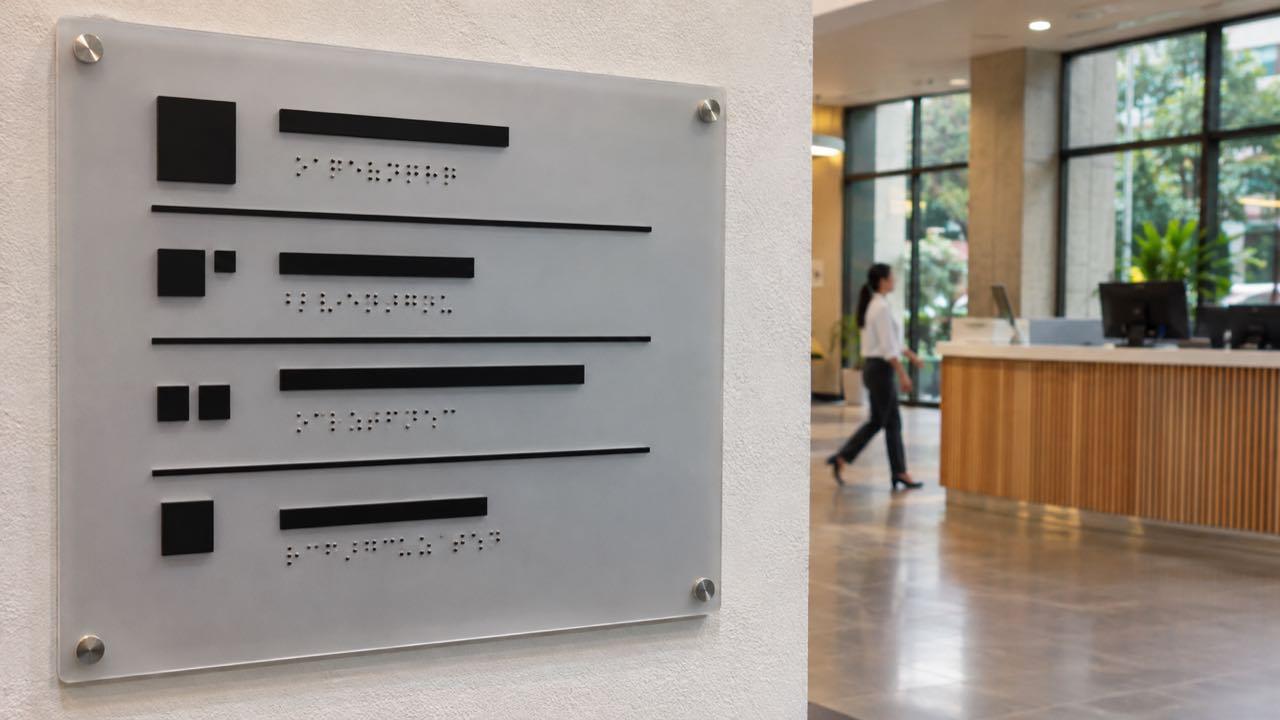
The provisions of Colombia’s Law 2265 of 2022 take effect on July 1, 2027. Article 15 requires state entities to install braille signage in the common areas of their buildings so people with visual impairments can use them independently. The law allows these changes to be made gradually, using each year’s operating budget.
An area directory can bring together the names and locations of offices, services, or departments in one place. Its value lies in providing orientation before a person needs to ask for directions. The law does not name directories separately, but they can be part of a signage system in common areas.
The duty to mark common areas in braille falls on state entities, but the law also reaches some private businesses. Article 5 requires every tourism service provider to make information about its services accessible in braille or through other accessibility tools. Hotels and other tourism providers therefore have their own reasons to review how they inform guests.
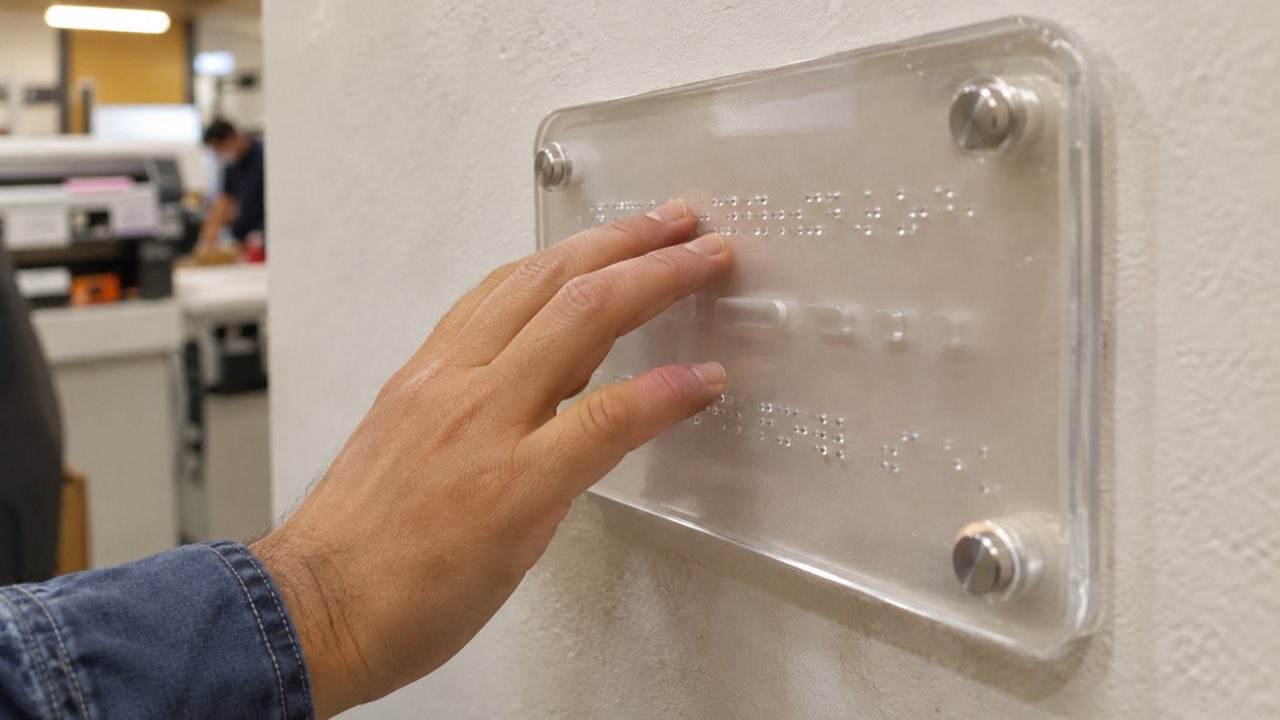
Hand reading braille and raised letters on an interior sign. Illustrative image generated with artificial intelligence.
Accessible signage is not limited to braille. Colombia’s National Institute for the Blind (INCI) describes signs with braille, large print (enlarged lettering), raised relief, and graphic symbols. Combining tactile reading, contrast, and symbols broadens the ways people can find their way. The institute also lists acrylic, self-adhesive vinyl, and laser-cut acrylic as materials for these signs in its overview of braille signage.
A directory requires deciding which information remains stable and which changes frequently. An area layout that changes requires a plan for replacing its components. That decision affects the format, mounting method, and whether variable information should be separate from the main structure.
These solutions are already used in public buildings. In July 2025, Colombia’s National Institute for the Blind advised Bogotá’s Mayor’s Office on the design and installation of tactile walking surface indicators, which people detect with their feet, based on NTC 5610:2022, the Colombian technical standard for tactile signage. It was technical advice for a specific interior signage project. The scope appears in the institute’s post about the project.
In September 2026, Bogotá’s District Tourism Institute listed tactile maps, accessible directories, raised relief, and braille among its solutions for tourism. Accessible directories appear there as a specific way to guide visitors. The full list is in its Directory of Accessibility Solutions for Tourism.
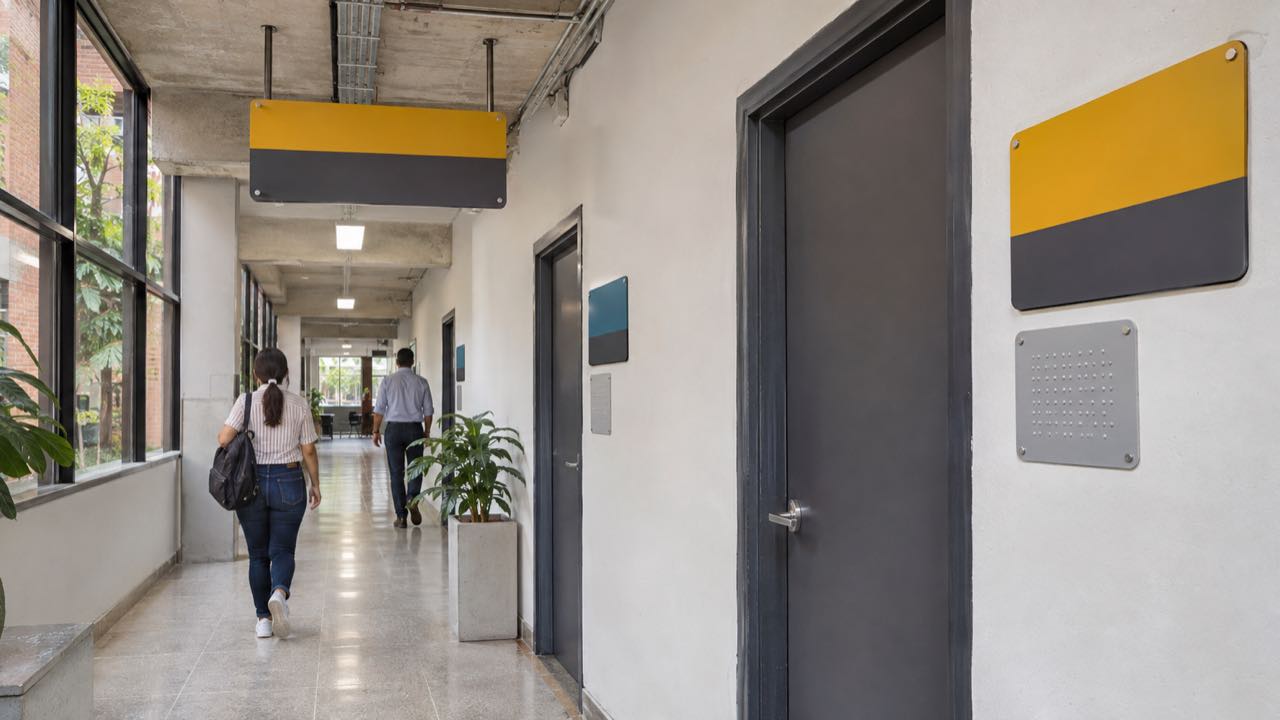
Hallway with accessible directional signs and tactile door plaques. Illustrative image generated with artificial intelligence.
Cost, lead time, and material availability vary with the number of pieces, materials, finishes, and installation. There is no universal price or lead time for producing an accessible directory. A comparable quote can define those details for an interior and safety signage project.