By Azabache Producciones on
Vehicle branding is installed at 16–32 °C: curves change the application
Temperature, curves and vehicle windows determine how a vehicle graphic is applied and which conditions need to be assessed.
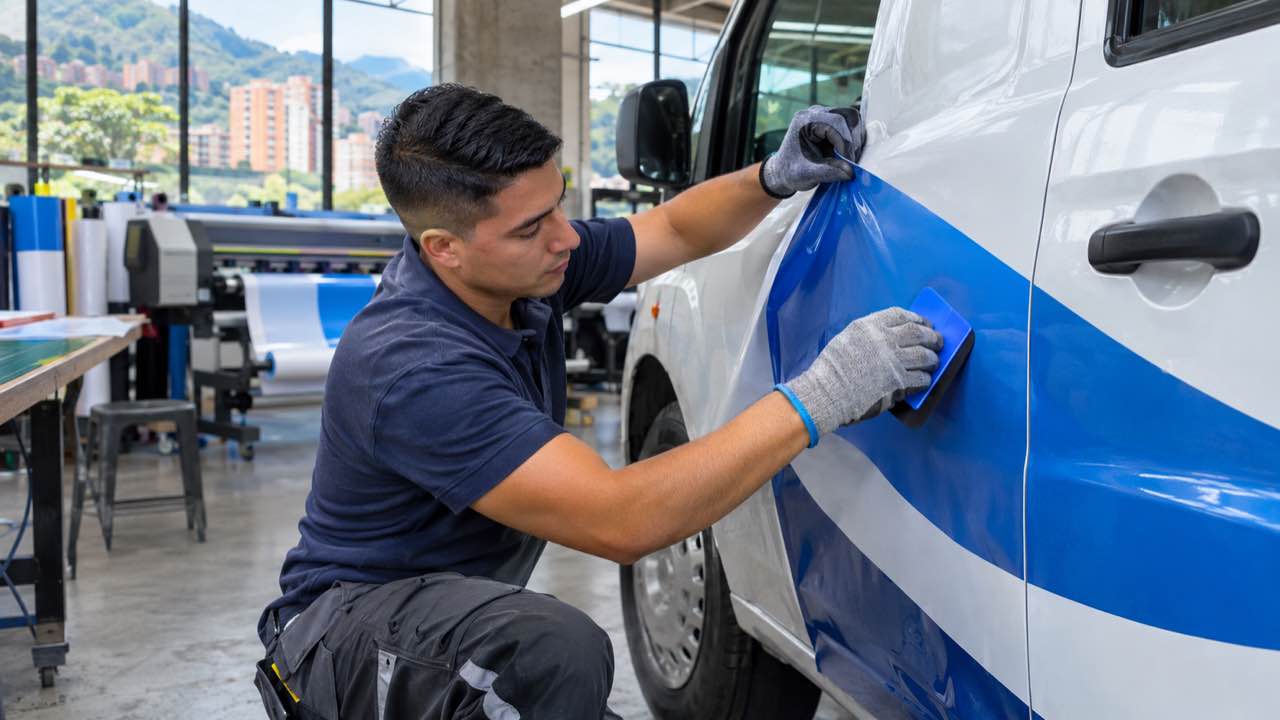
Vehicle branding can fail on a curve even when the graphic looks right on a flat door. The difference is not only in the design: application temperature, the body shape and adhesive behavior all affect the result.
The 3M vehicle graphics technical guide says that both air and vehicle surface should be between 16 °C and 32 °C for its specified systems. That range is not a rule for every material, but it shows why application is more than attaching a print.
Pricing and turnaround do not have one comparable value across print shops. They vary with graphic size, material, body condition, complex areas and finishing, so a useful quotation states what it includes and the conditions required for installation.
What does vehicle branding mean?
Vehicle branding is the application of printed graphics to a car to identify a brand, campaign or fleet. It can cover anything from one small panel to multiple areas of the body, and that scope changes the design, preparation and application required.
Not every part of a vehicle behaves the same way. The design needs to anticipate cuts and joins on the car’s complex areas, because a broad door can offer a more stable surface than a handle, a deep recess or an edge.
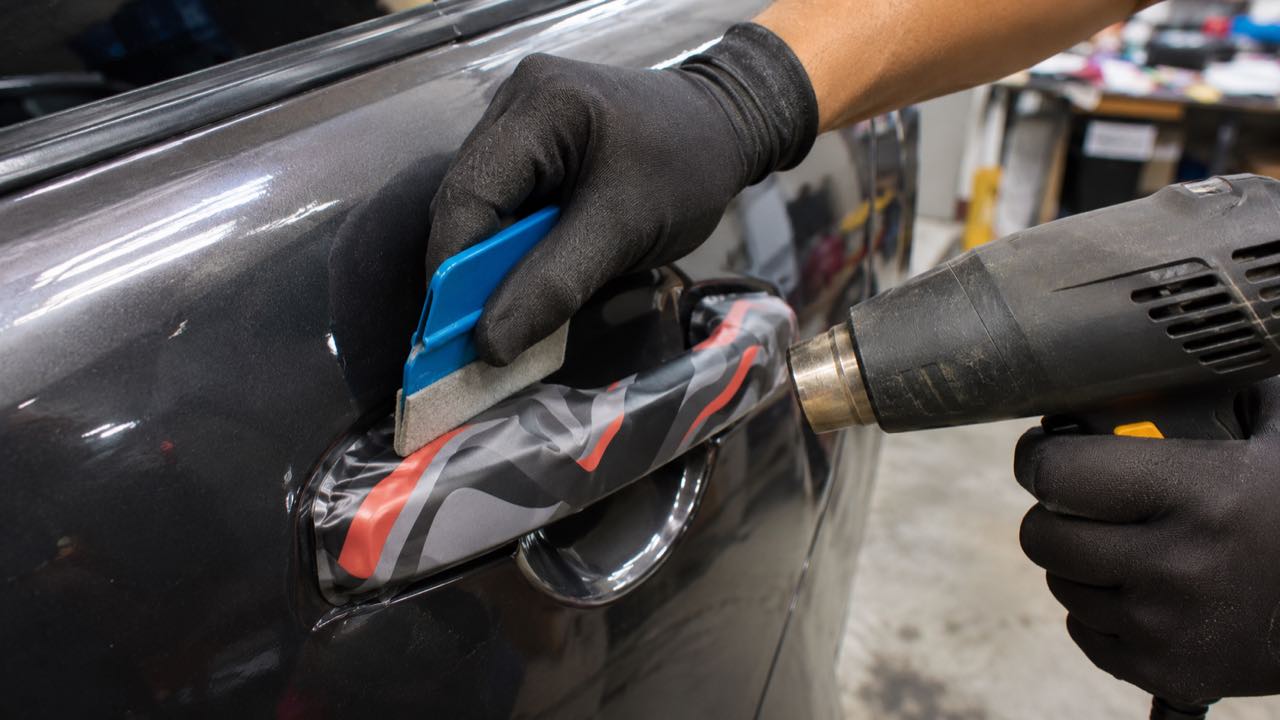
Vinyl application with heat around a car door handle. Illustrative image generated with artificial intelligence.
Why does temperature change the application?
Temperature affects when an adhesive sets and how easily air can be removed during application. Above 32 °C, a film can bond too early and trap air, according to 3M’s guide for the systems it covers.
For those systems, 3M also states that the vehicle remains above 16 °C for at least 12 hours after application before exposure to cold or moisture. Applicable conditions depend on the film, ink, laminate and each supplier’s instructions.
What changes when a graphic runs over curves and contours?
Curves, recesses and contours require the film to be shaped with heat and its remaining tension to be controlled. An application without the right procedure can cause wrinkles or lifting in contoured areas, a consequence 3M identifies for difficult applications.
Each system specifies a different heat range for shaping graphic curves: 50–55 °C, 55–60 °C or 60–65 °C, depending on the film and its overlaminate (the protective layer over the graphic). For graphics with UV-cured inks or clear coats, cured with ultraviolet light, the same guide warns of cracking on complex curves and calls for an application test.
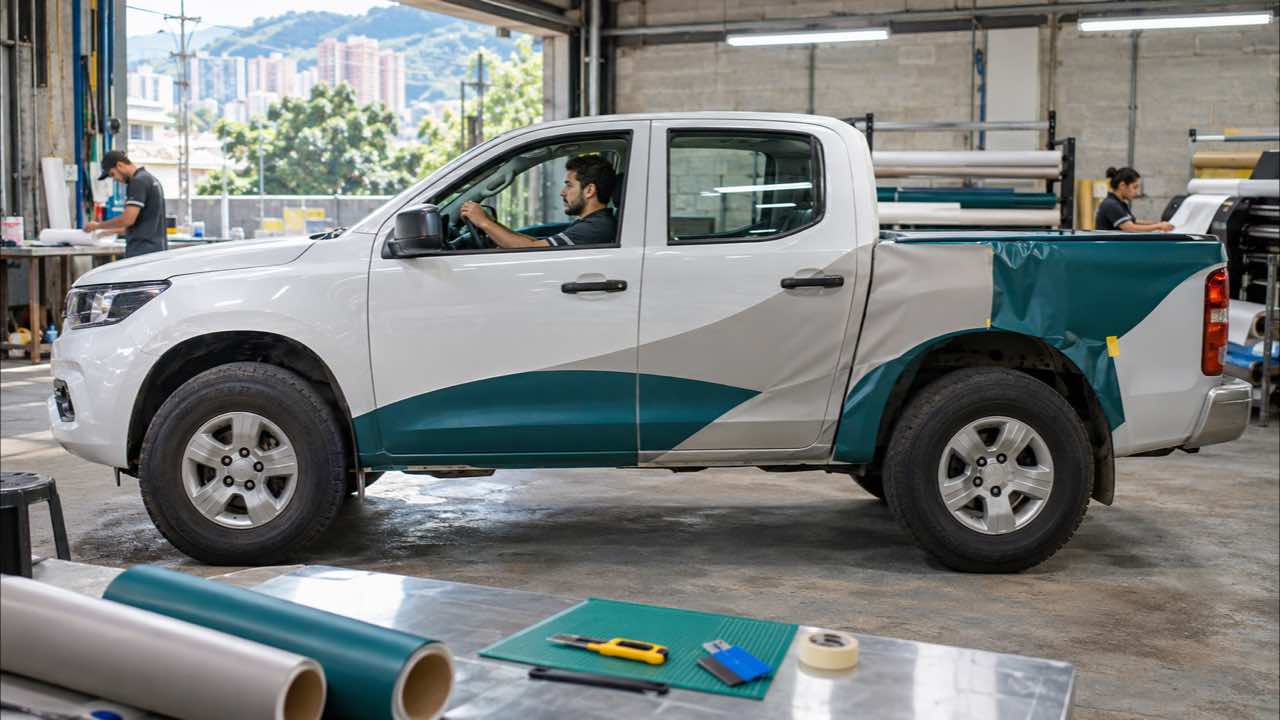
Technician checks visibility from a van with partial graphics. Illustrative image generated with artificial intelligence.
Can the design cover vehicle windows?
Graphics on windows require a visibility review before the design is defined. Colombia’s National Traffic Code penalizes window adhesives that obstruct visibility, so perforated window film (a sheet with small holes) or any other solution needs assessment for the vehicle and the area to be covered.
- Campaign information is adapted to the surfaces that can actually receive graphics.
- Curved areas are considered in the artwork, not only at installation time.
- Local requirements and vehicle characteristics are reviewed before working on windows.
A durable application starts by matching the graphic to the car’s actual material and geometry. For projects combining design, printing and installation, the scope of exterior signage and vehicle branding helps define those choices before production.