By Azabache Producciones on
Bre-B QR table talkers reserve at least 5% of the design for the seal
Bre-B QR table talkers need a clear visual hierarchy: the seal takes up at least 5% of the printed piece at checkout.
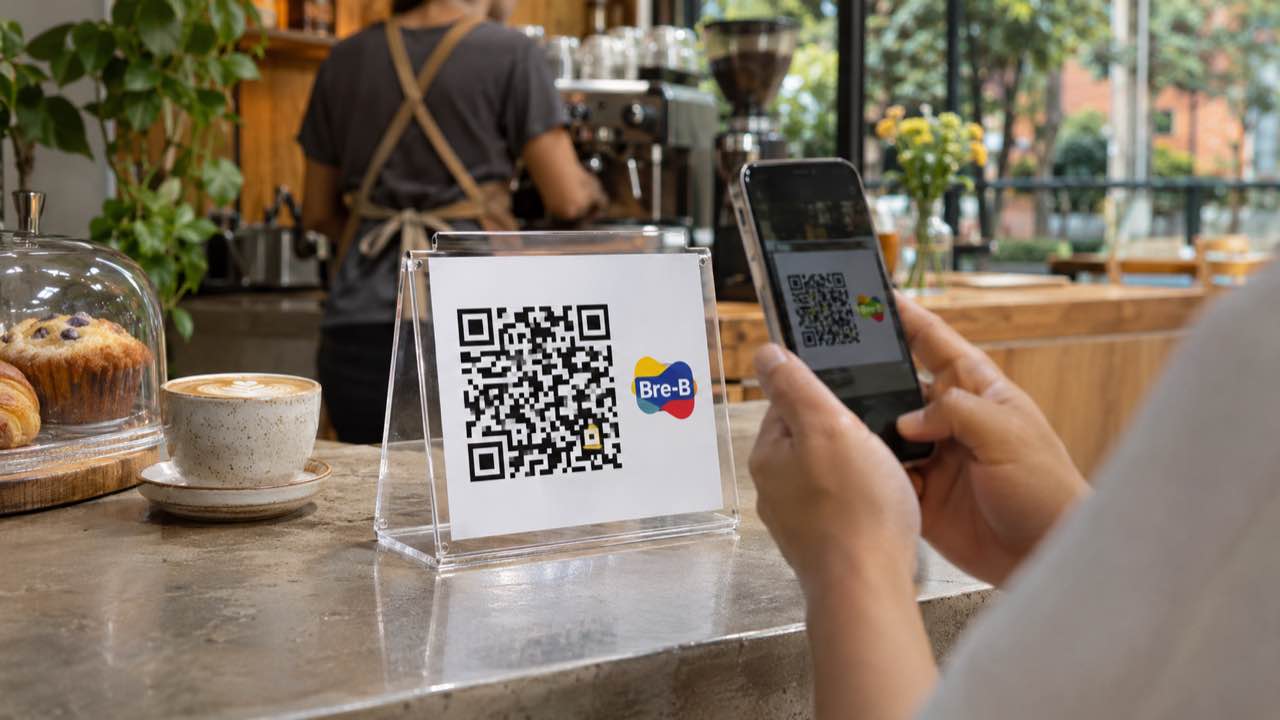
Bre-B QR table talkers reserve at least 5% of their area for the seal. This condition applies to the piece that displays the code, regardless of its material or printing method, according to Banco de la República External Regulatory Circular DSP-465.
The proportion matters because QR codes already accounted for 37% of Bre-B transactions in its first year, according to Banco de la República. That everyday use makes a small piece highly visible: the one placed by the counter, table, or checkout.
In addition, 62% of those transactions were below COP 50,000, pointing to routine payments between people and small businesses. The figure appears in the central bank’s review of Bre-B’s first year.
What must a QR table talker for Bre-B payments show?
The piece must show the full-color Bre-B seal and give it at least 5% of the total area. The seal keeps that proportion even on a small table talker, so its space is set in the artwork rather than at the end of printing.
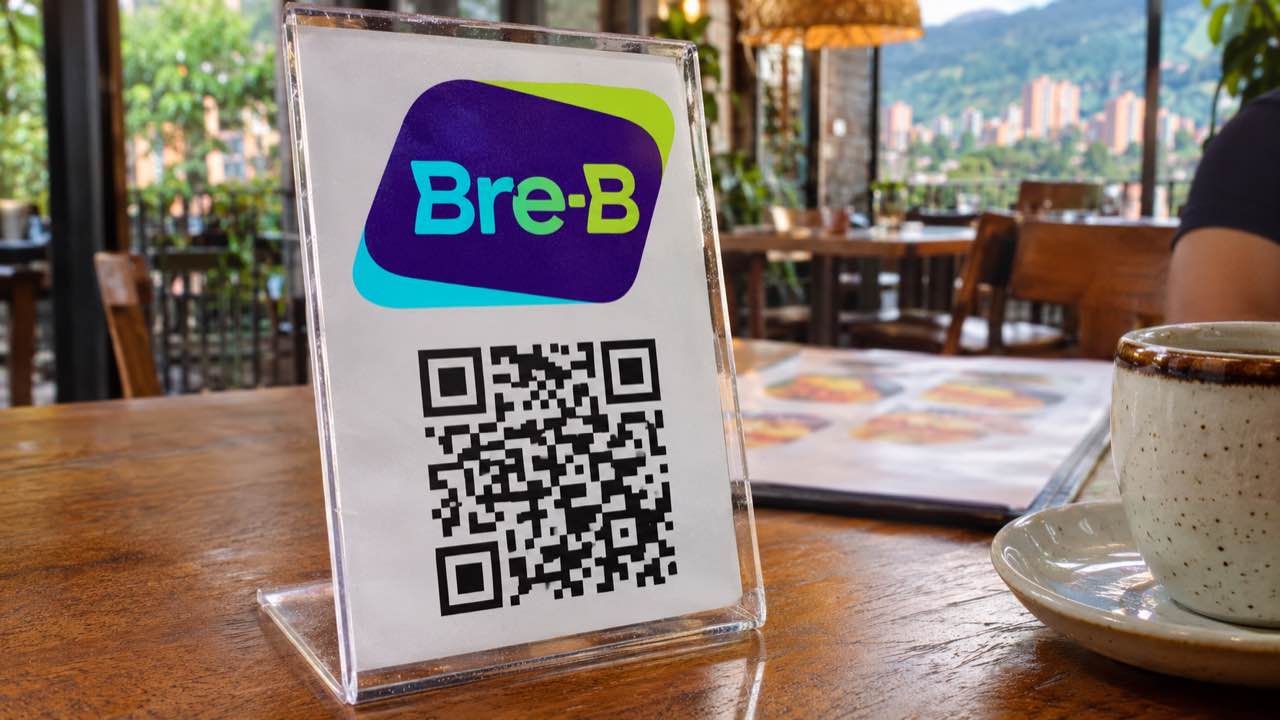
Acrylic table talker with QR code and Bre-B seal on a restaurant table. Illustrative image generated with artificial intelligence.
When another logo appears, the Bre-B seal must be the same size as or larger than the accompanying logo. The rule allows it to appear only with the acquirer’s logo or the immediate payment system’s logo; the master artwork and authorization rest with the financial institution or acquirer.
Why does the code need a visible instruction as well as the seal?
The code works better when people immediately understand what happens after they scan it. A short instruction reduces the uncertainty that can hold back interoperable payments, without competing with the QR code or crowding the table talker.
The context helps explain it: half of micro and small businesses have doubts about easily implementing interoperable QR codes. Banco de la República’s first Electronic Payment Services Survey also reported that 29.4% of businesses accept interoperable QR payments and 54.6% accept interoperable immediate transfers.
What is checked before promotional table talkers are produced?
Before production, the final QR code, authorized seal, logo hierarchy, and readability at the planned distance are checked. A cellphone test confirms that the code still works at the selected size; the holder can be acrylic, paperboard, or another material based on location and use.
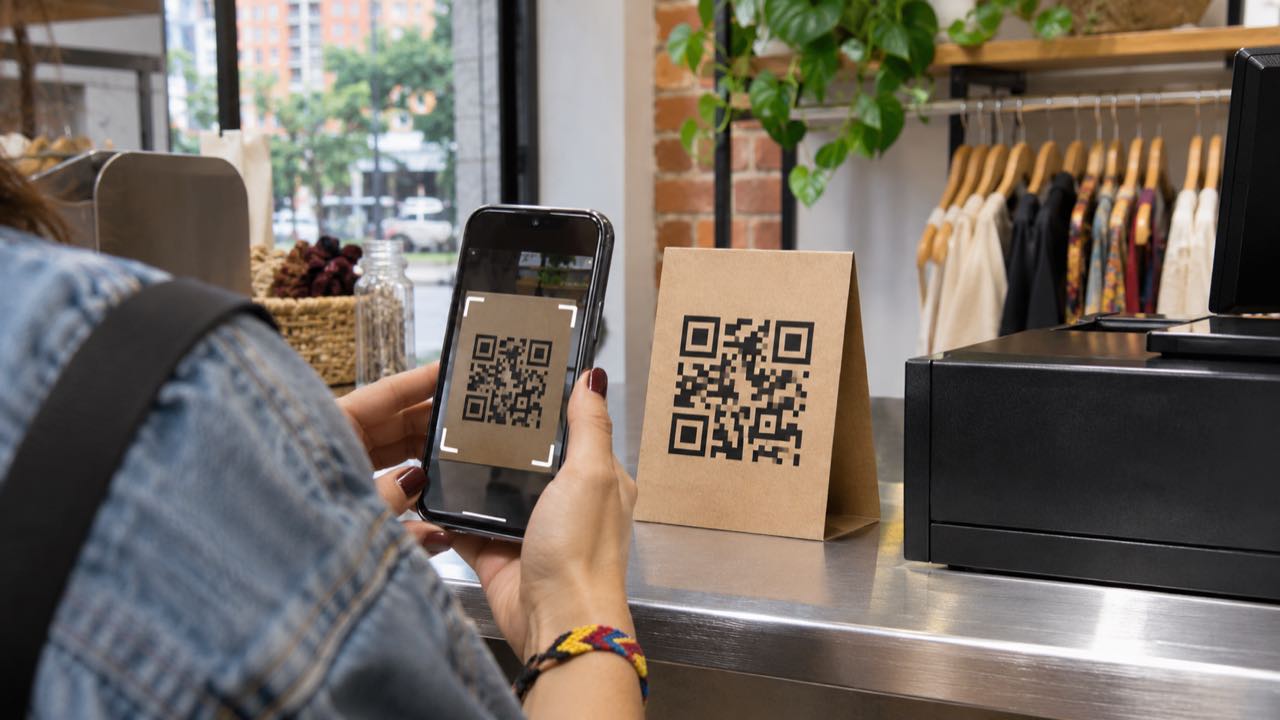
Person testing a QR code printed on a cardboard table talker with a cellphone. Illustrative image generated with artificial intelligence.
The format also changes the piece’s presence at the point of sale. A stable table talker keeps the code visible throughout the purchase, while a shelf or counter piece needs dimensions and fastening suited to its surface. Point-of-sale display solutions can adapt that setup to the project.
- The final QR code file and a scan test at the production size.
- The full-color Bre-B seal, its minimum area, and its relationship to the authorized logo.
- The material, base, and placement that will hold the piece at the payment point.
There is no universal price or turnaround time for these table talkers. Cost and lead time change with the run, material, finish, and artwork approval; a comparable quote states those conditions before production starts.