
By Azabache Producciones on
Law 2633 requires restroom-use notice: it sets no sign design
Law 2633 requires notice of the right to use a restroom, but sets no size, material or pictogram rules for the sign.
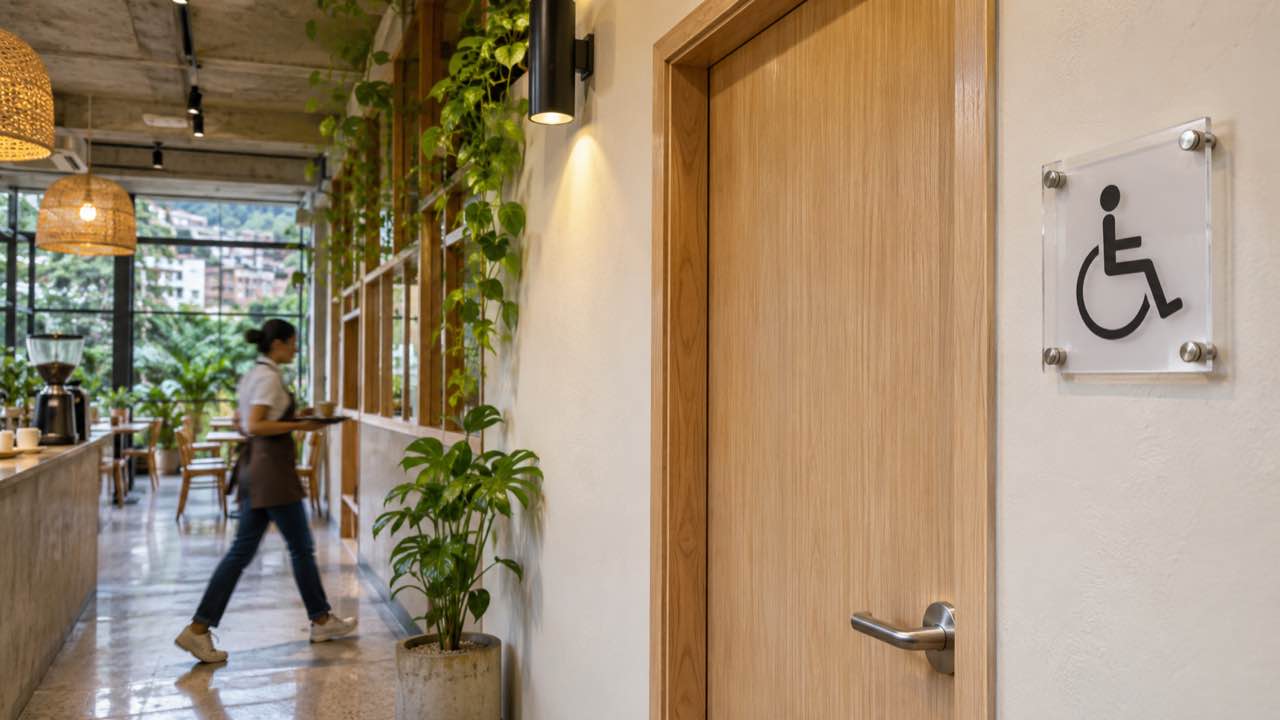
Law 2633 of 2026 amended Article 88 of Law 1801 and brought restroom access into focus for establishments open to the public. The law requires informing people with disabilities about that right. The legal text allows that information to be given through physical means or verbally.
The rule covers children, pregnant women, older adults, people with disabilities or reduced mobility and, when needed, their caregivers or companions. Restroom use does not depend on the person being a customer.
Law 2633 was published on September 15, 2026. The legal change concerns access and information, not the sign's design.
What should public restroom signs communicate?
The sign should make clear that people with disabilities may use the establishment's restroom even when they are not customers. The information can keep that right from being hidden behind a door. The Bogotá District Legal Secretariat explains that the duty to provide the service also covers the other groups defined by the law.
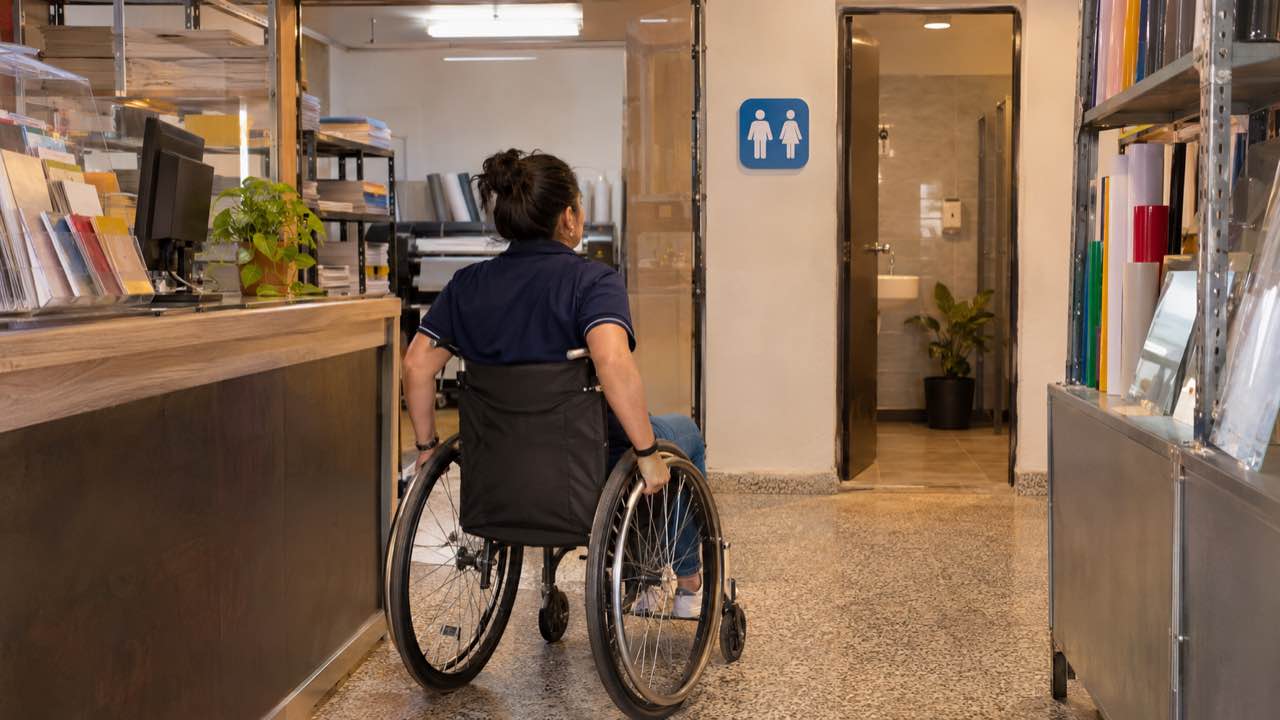
Person in a wheelchair following a sign to the restroom. Illustrative image generated with artificial intelligence.
An interior sign can locate the restroom and communicate its availability along the visitor's route. Message clarity matters as much as finding the door quickly. If access is denied, the law provides ways to report it to the relevant authorities, in person or virtually.
For citizen-service locations, Colombia's public-service authority recalled in 2025 that in-person spaces should include universal signage and accessible restrooms. That precedent addresses state entities and creates no new rule for every private business.
What should be defined before printing a restroom sign?
Law 2633 sets no size, material, mounting height, braille or pictogram requirements for the physical sign. No single design is imposed by the law for making these signs. The piece is therefore defined by the space, visitor flow and the project's particular conditions.
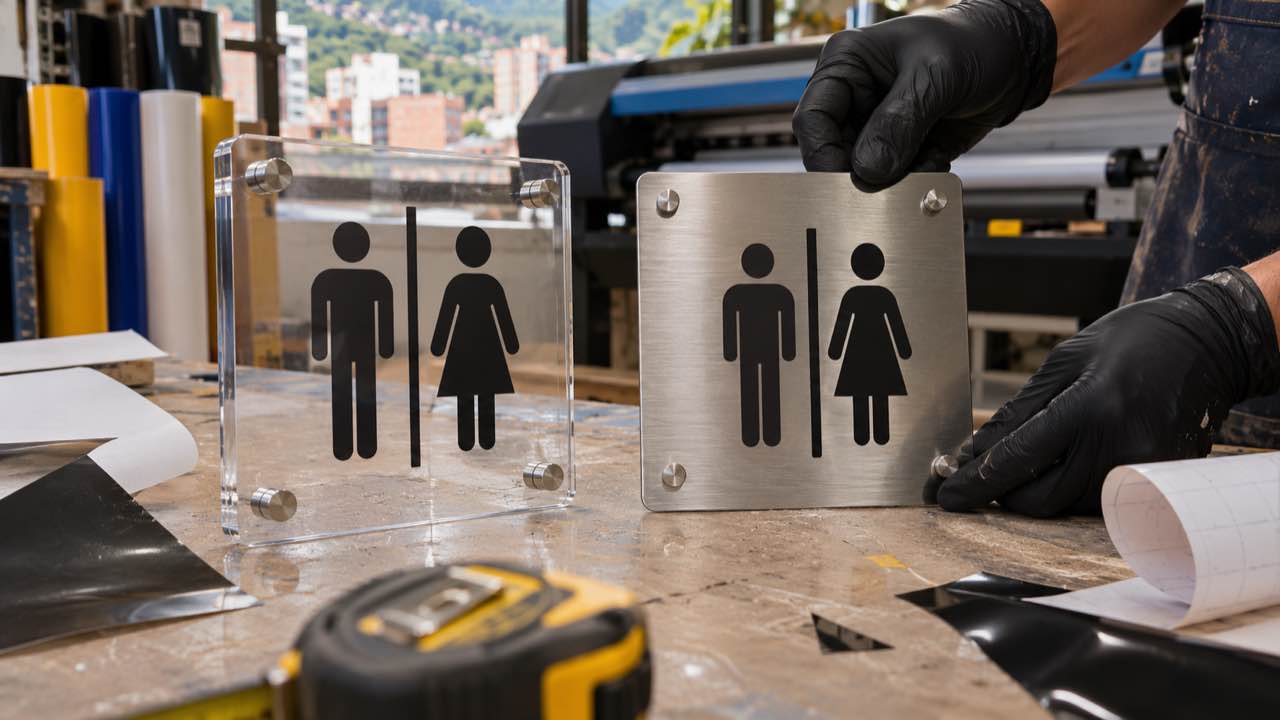
Sample plaques for interior restroom signage. Illustrative image generated with artificial intelligence.
A 2025 institutional audit based on NTC 6047:2013 reviewed visible restroom signs between 1.40 and 1.60 metres and recorded a lack of raised lettering and braille in that case. That result shows one practical application and does not measure compliance across the country. Its reference is for citizen-service spaces; its scope for a business depends on the project, the competent authority and the applicable standard.
Material, finish and lead time change with the number of pieces, the surface and installation. There is no price or production time that is comparable across every project. A well-defined interior safety signage project records those conditions in the quotation.