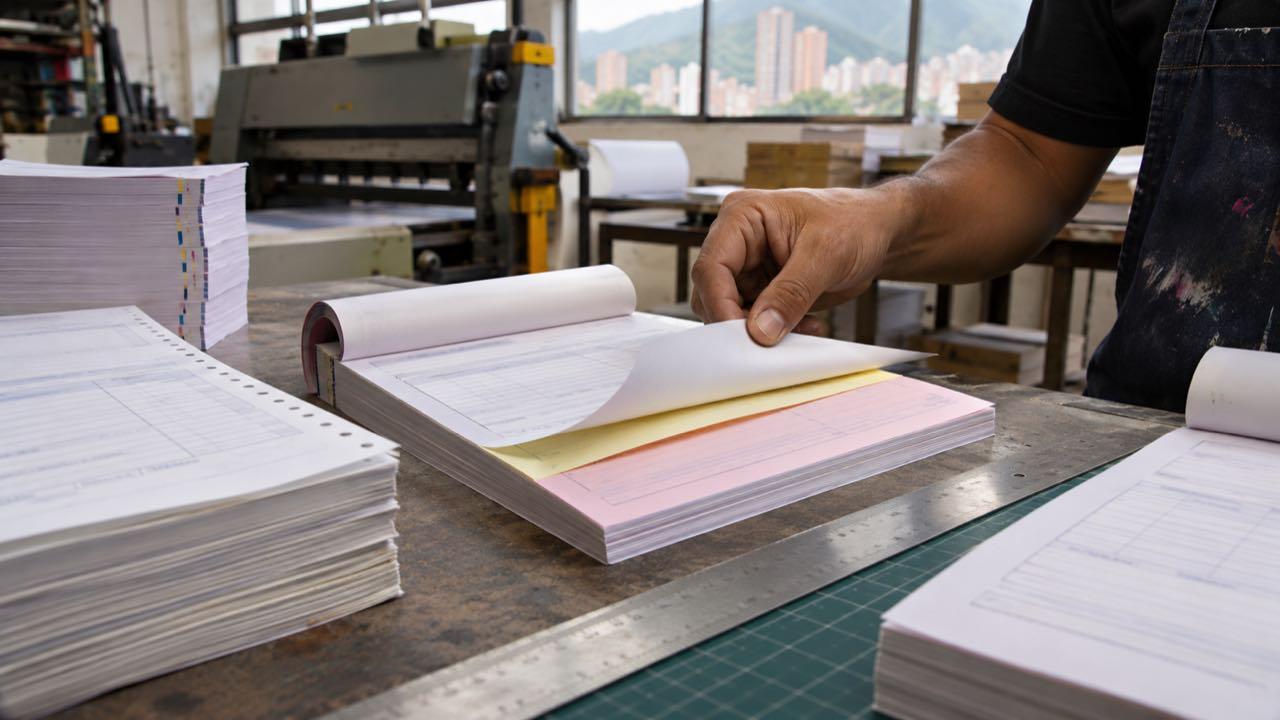
By Azabache Producciones on
Paper contingency invoices: the 48-hour period starts when the system returns
A technological outage can allow paper invoices, but each record must be kept and then transmitted within the applicable deadline.
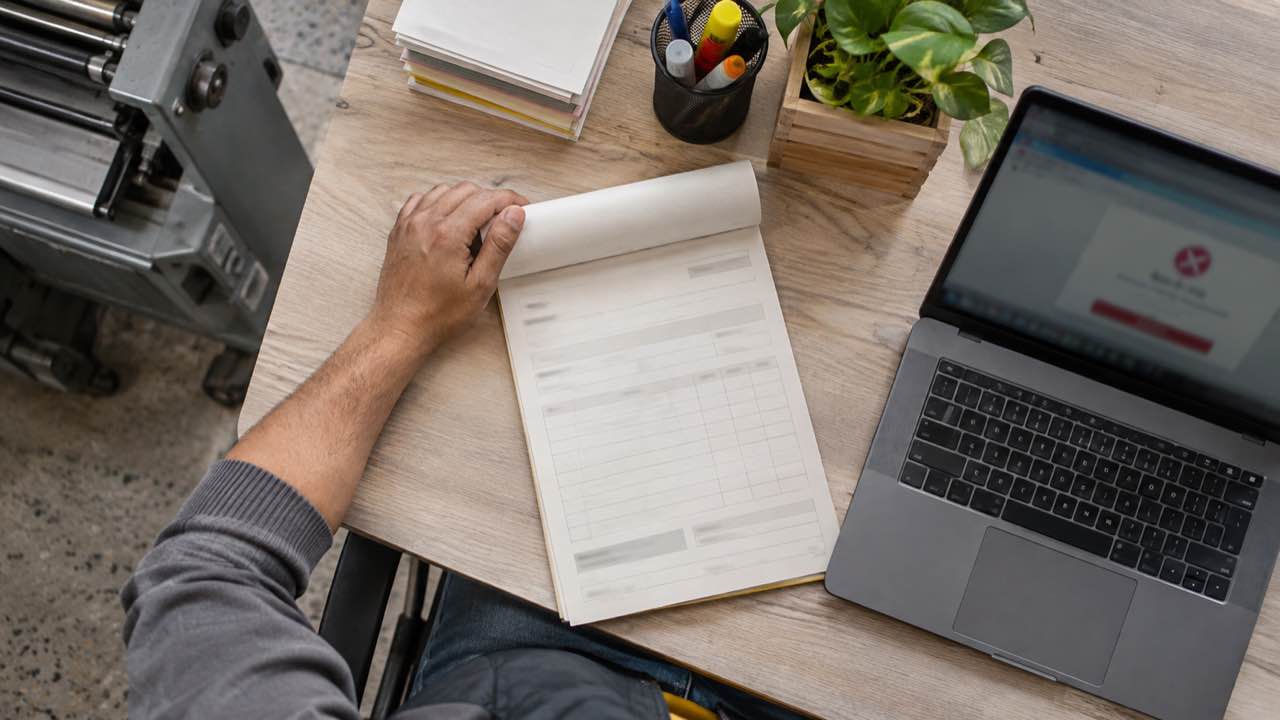
A technological outage does not make an invoice pad a free alternative to electronic invoicing. Paper applies when a technological issue prevents electronic invoicing. That distinction determines when it may be issued and what must happen to every record after the system is restored.
The practical consequence has a clock: when the contingency is attributable to the issuer, paper invoices are transcribed and transmitted to DIAN within 48 hours after the issue is resolved. The deadline starts after the failure is overcome, not when the pad is printed.
How the invoice was made also matters. Pads completed by hand or signed manually must identify the printer and carry certain details preprinted for this type of document. A contingency invoice pad needs preprinted information before it is used.
When are electronic invoices used?
An issuer required to use electronic invoicing uses that system as the rule. A paper invoice pad is reserved for the moment when a technological issue prevents electronic issuance; it is not a second option chosen for convenience. A technological contingency is the condition that enables paper use.
The rule appears in DIAN Resolution 227 of 2025. The physical document or its electronic copy must be retained because it supports what occurred during the interruption. A copy of every invoice remains necessary after the contingency.
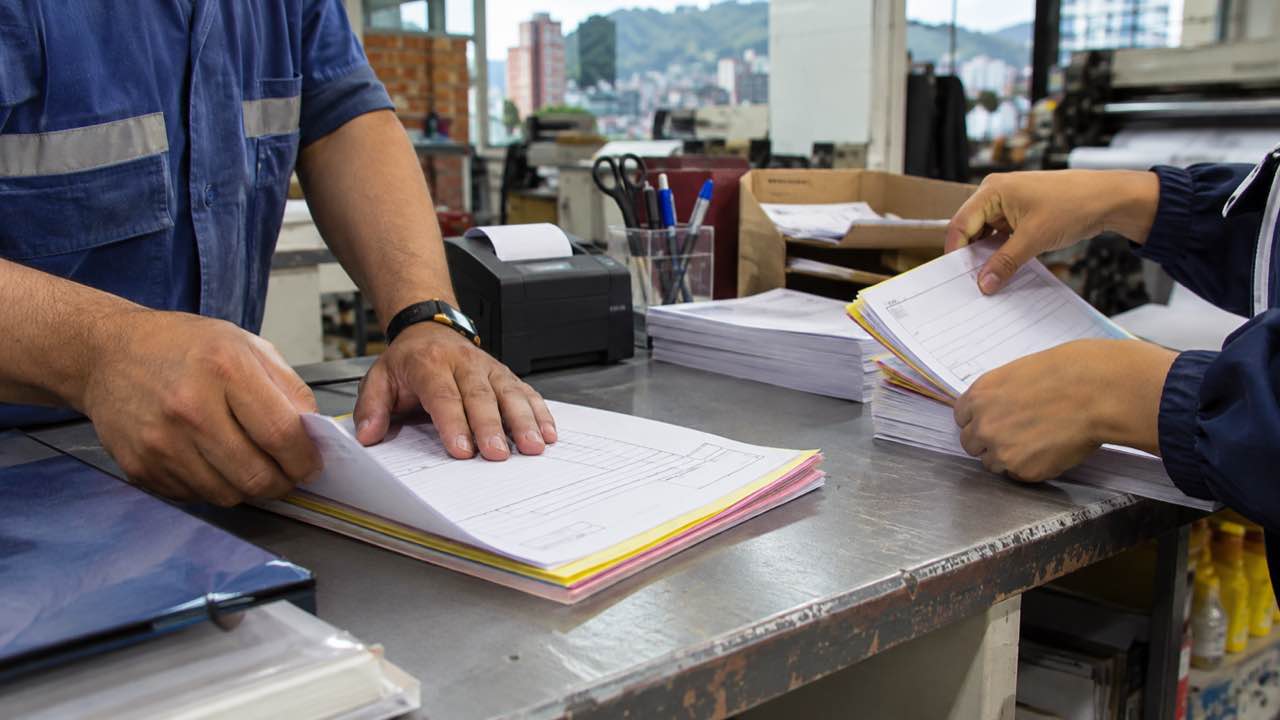
Hands organizing numbered copies of printed invoices. Illustrative image generated with artificial intelligence.
What must a contingency invoice pad include?
A paper invoice completed by hand or signed manually requires the printer’s name or business name and tax identification number. In addition, some details must be printed by industrial methods before the document is used during a contingency. The printer’s identification is part of a paper invoice.
The customer’s email address needs a qualification. For foreign-currency and travelers-check purchase and sale professionals issuing paper invoices during a contingency, it must be included, according to DIAN Concept 4995 of 2026. That email is a requirement specific to foreign-currency operations.
What happens to paper invoices when the system returns?
After a contingency attributable to the issuer, paper invoices must be transcribed as type 3 invoices and transmitted within 48 hours of overcoming the issue. The physical or electronic support is kept with the record of that transaction. The later transmission makes the backup part of the electronic process.
There is also voluntary regularization for certain operations not invoiced or invoiced without requirements before Legislative Decree 0240 of 2026 took effect. DIAN Resolution 11 of 2026 calls for transcription as type 03 and identification with code 20-REG. The special regularization uses an identification different from an ordinary contingency.
What is the price of invoices by the dozen?
There is no comparable per-dozen invoice price across printers. The amount changes with the number of pads, size, copies, numbering, paper and finishes; it can also vary with the details that must be preprinted. The invoice price depends on the complete configuration of the pad.
For that reason, a useful quotation describes format and run length rather than reducing the purchase to an isolated price by the dozen. In corporate stationery for Medellín businesses, invoices can be planned as a format ready for a possible contingency. Two quotations are comparable only when they describe the same specifications.
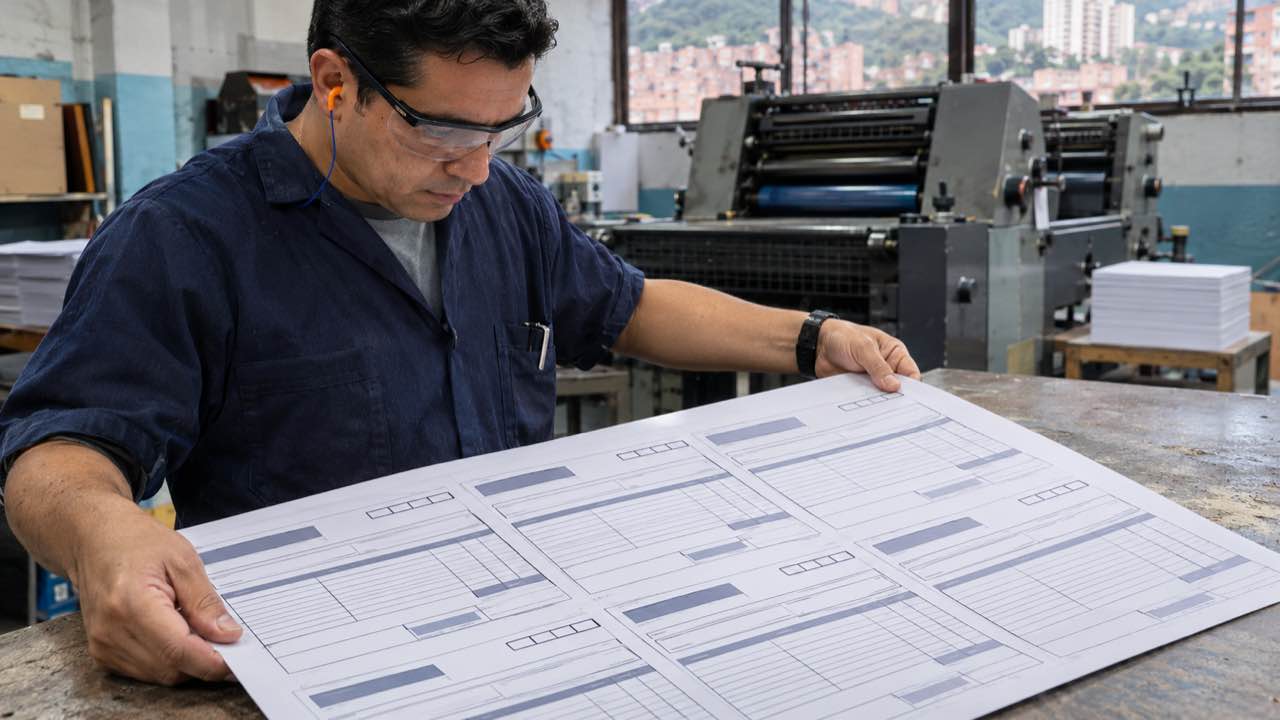
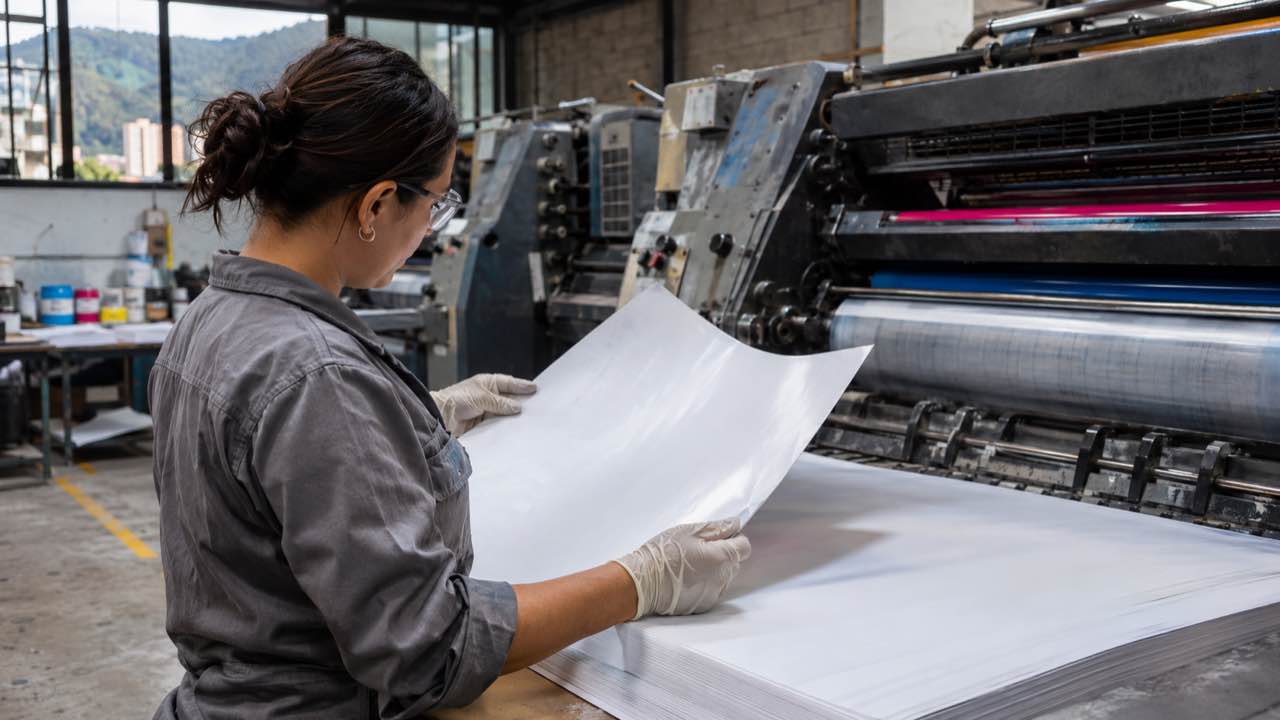
Reviewing a sheet of corporate invoices at a print shop. Illustrative image generated with artificial intelligence.
Where can invoices be obtained in Medellín?
A corporate-stationery printer can produce invoice pads from the specifications the operation requires and the details that must be preprinted. Paper, copy and finishing availability depends on the supplier and the project. The invoice pad is defined by use requirements, not only by its appearance.
Before ordering, tax information and design need to match the intended use, especially when the format will back up a technological outage. A well-prepared format avoids improvisation when electronic invoicing is interrupted.