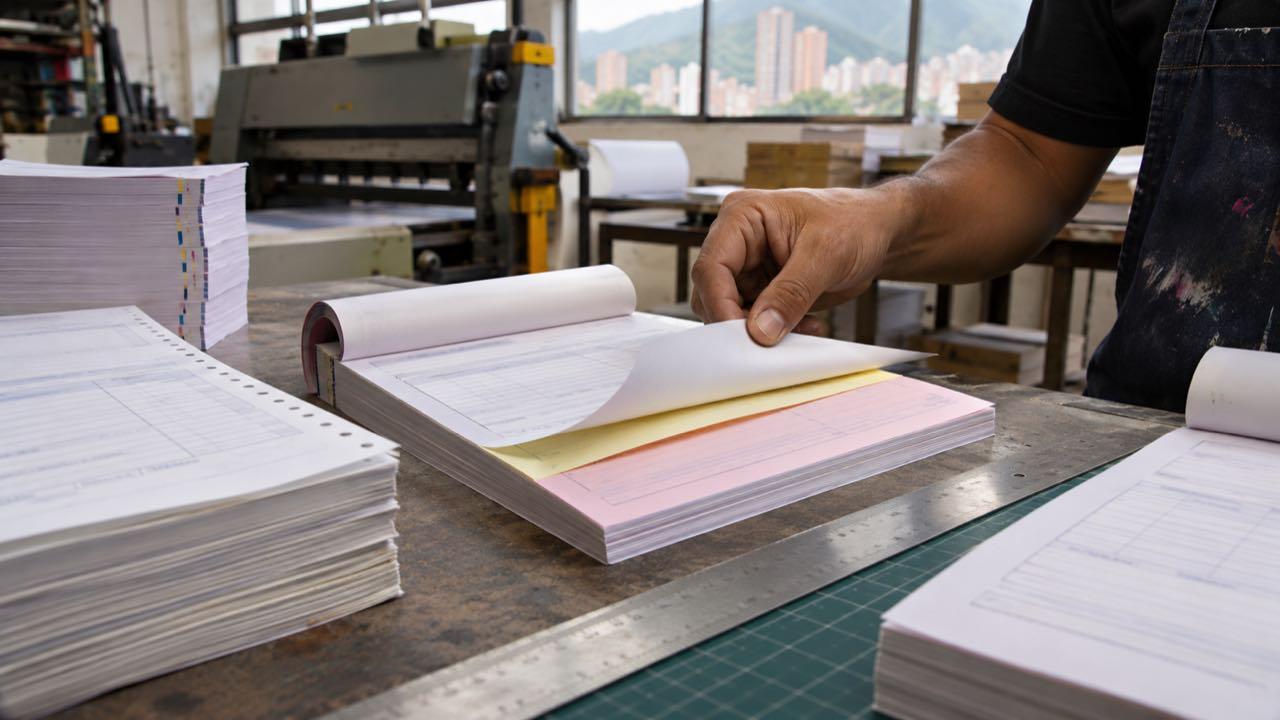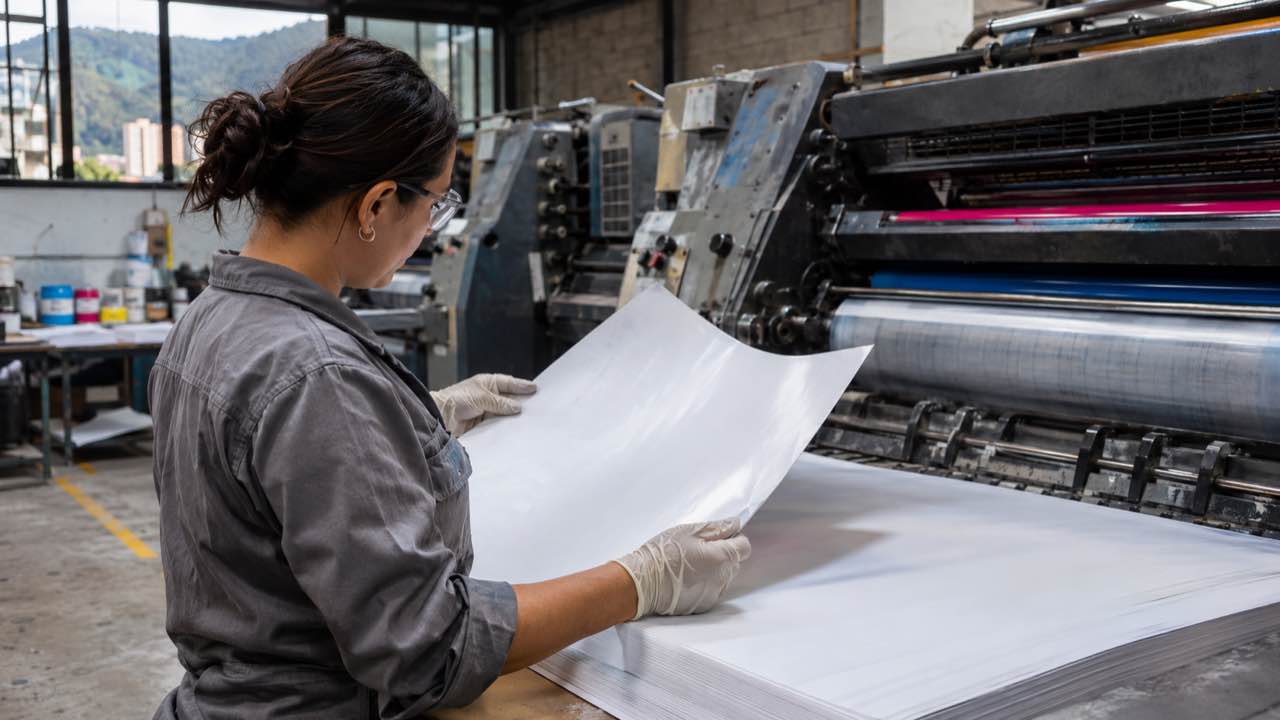
By Azabache Producciones on
Short-run brochures: folds and finishes change the production quote
A folded brochure’s cost changes with size, paper, fold, finish, quantity and delivery conditions—not with a single unit price.
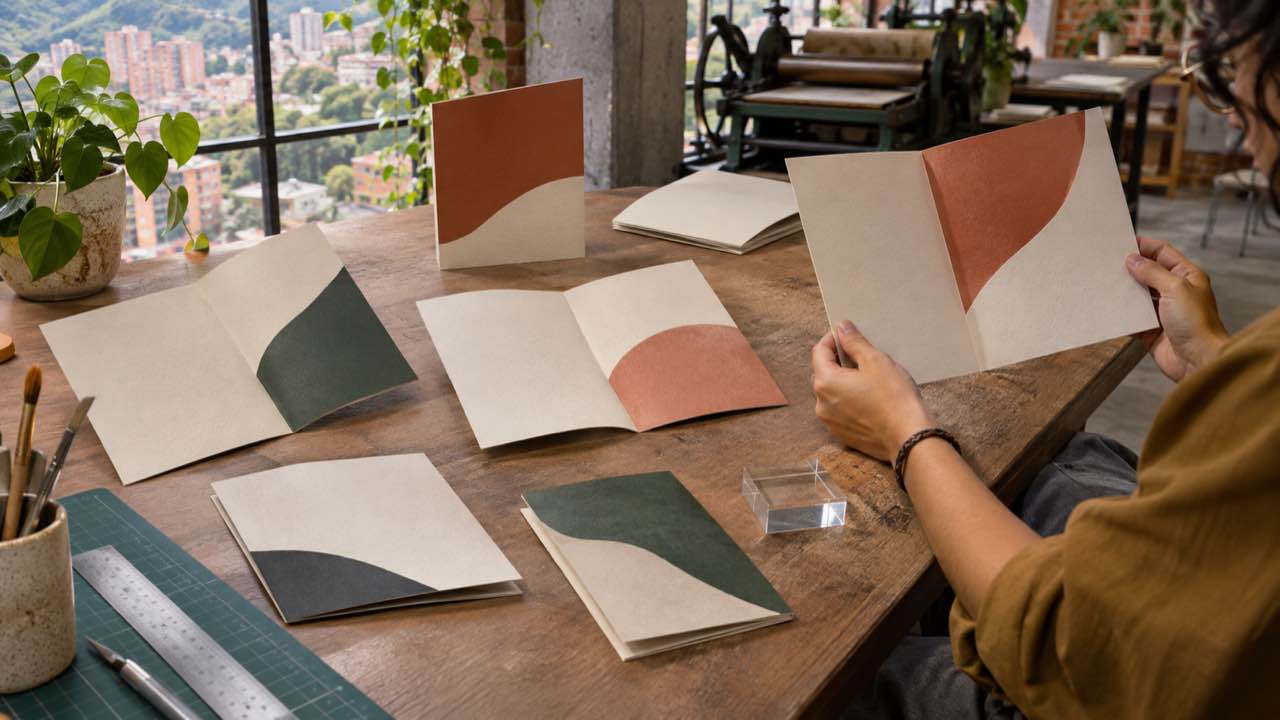
A folded brochure does not have a fixed unit price: open format, paper, printing, fold, finish, quantity and delivery all shape the quote. The fold turns a printed sheet into a piece with its own production conditions.
Print runs keep getting shorter: the trend toward ever-smaller runs is the main reason for growing interest in industrial digital printing, according to a HEIDELBERG press release from September 24, 2026 on Eastern Europe. For anyone ordering brochures, that means being able to order the quantity they will actually use.
That variation explains why two proposals are comparable only when they describe the same piece. A precise request makes it possible to assess commercial and marketing printing in Medellín according to the communication goal and actual production conditions. A comparable quote starts by defining exactly which brochure will be produced.
How much does brochure printing cost?
There is no standard brochure-printing price that fits every project. Cost changes with the closed and open size, substrate—the material that receives the print—color sides, quantity, fold type, finish and delivery. The same design can change in cost when just one production condition changes.
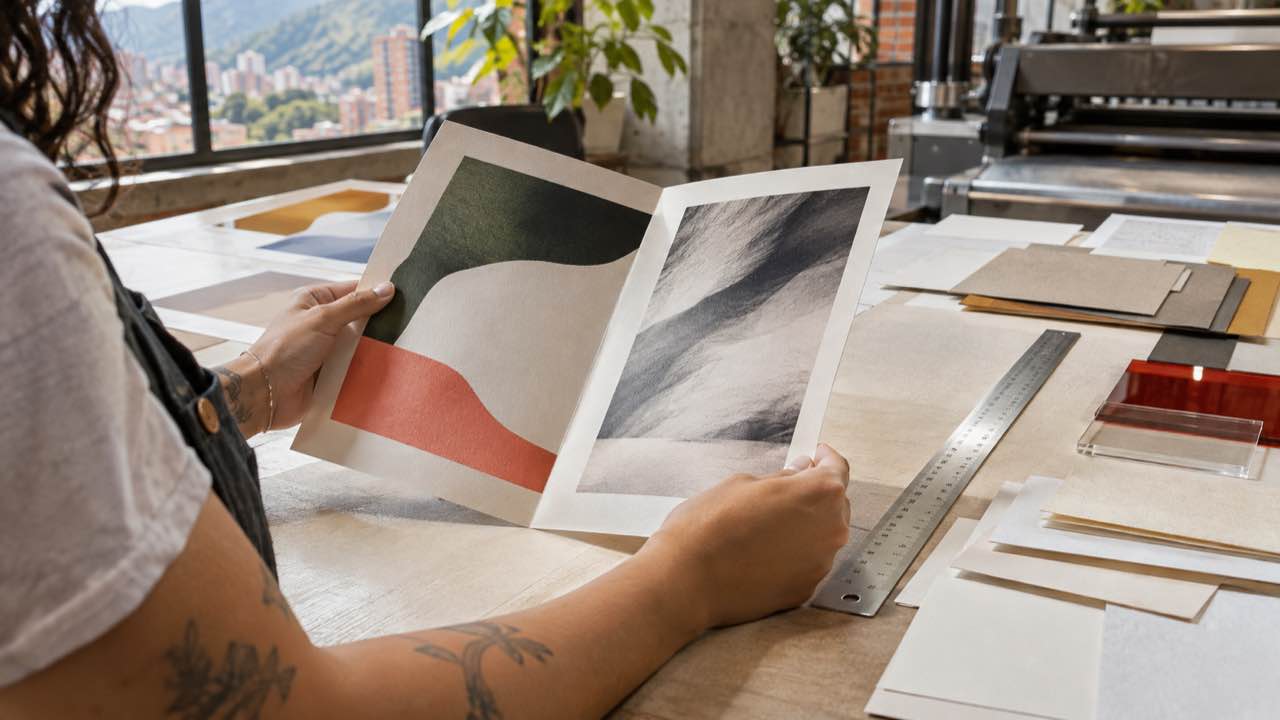
Person reviewing a brochure’s open size beside paper samples. Illustrative image generated with artificial intelligence.
Quantity changes how a job is produced, but it does not replace the other specifications. A small piece with a special finish may require more work than a larger run without it, so the unit price alone does not explain the whole decision. Unit price is not enough to compare two brochures with different specifications.
What changes the price of promotional brochures?
Paper and finish change both appearance and process. Paper weight is the weight per square meter; UV varnish is a glossy layer cured with ultraviolet light. Both should be specified when they are part of the piece. Paper, weight and finish must be described for the quote to be equivalent.
The fold also needs a specific description: a two-panel piece with a center fold is not the same as one with a different orientation or size. The fold line affects reading order, safe margins and paper behavior. The fold type affects the design and the operation that completes the brochure.
What does a brochure need before printing?
Before printing, the design needs to state its open size, closed size, number of sides, colors, paper, quantity and fold. It should also allow for bleed, an image extension that prevents white edges after trimming. The file must match the open size before the piece is folded.
Color is usually prepared in CMYK, a combination of four inks for printing. Text, codes and logos should respect safe margins and the fold area so they remain legible when the piece is closed. The fold area should remain free of essential information when the design requires it.
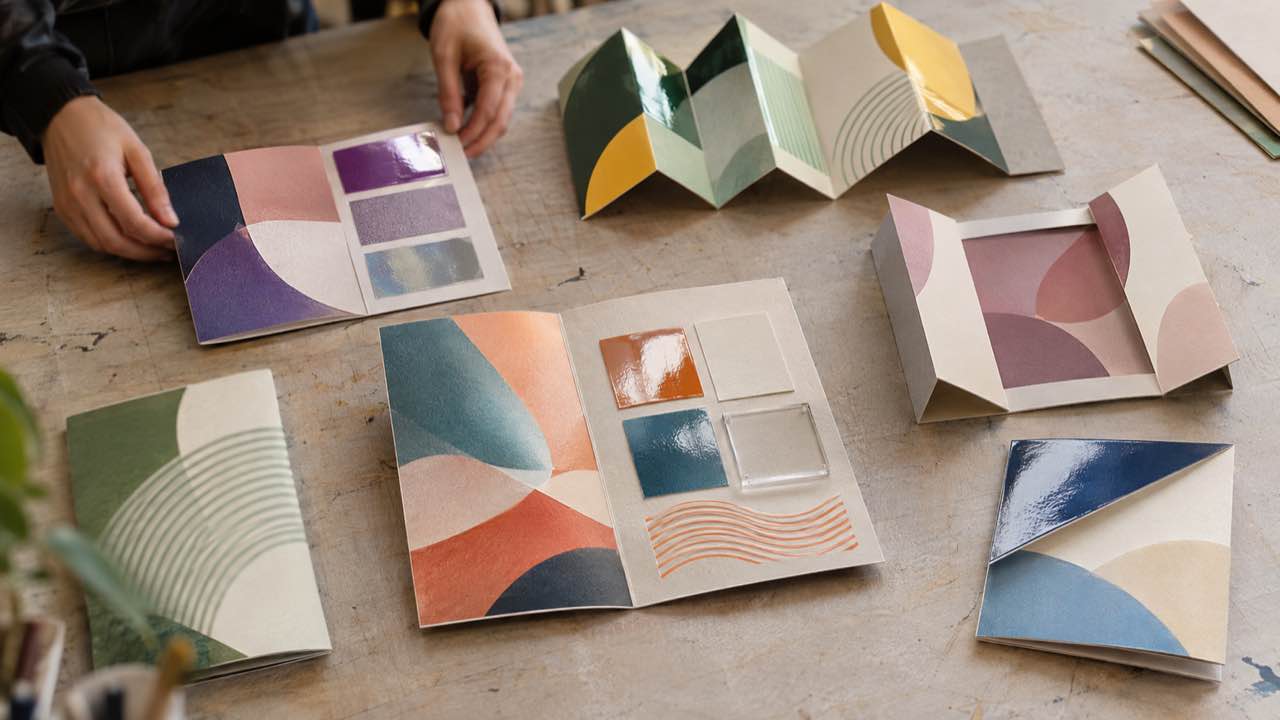
Brochures with different folds and finishes on a light table. Illustrative image generated with artificial intelligence.
What makes a brochure informative or creative?
An informative brochure arranges a message to be read in sequence; a creative one uses that same structure to build a visual experience. In both, the cover, inside and reverse have different roles because the piece is discovered as it opens. Creativity works best when it supports the order in which information is understood.
Digital embellishments such as raised varnish and foil are gaining ground: in the 2025 Taktiful and WhatTheyThink study, 88% of print companies with that equipment said their clients are at least somewhat interested in them, according to WhatTheyThink. What matters is that the finish strengthens the brochure’s message.
Printing only the final version, in the quantity you will use, also reduces waste: printing only the documents that are needed is one of the practices recommended in the environmental good-practice guide of Colombia’s National Land Agency (October 9, 2025; in Spanish).